Sliding puzzles are a family of brain teasers with one thing in common: nothing leaves the board. You can only move pieces into empty space, so every move changes what comes next. That makes them one of the best ways for children to learn to plan, and they come in versions for every age.
The 15 puzzle: numbers in order
The best-known sliding puzzle is the 15 puzzle: fifteen numbered tiles in a 4 by 4 frame with one gap. It caused a craze in the 1880s and has been around ever since. The goal is to put the numbers back in order.
Children usually start by sliding tiles at random, then discover a strategy: finish the top row and don’t disturb it again, then the next. That moment, realising a puzzle has a method, is valuable. Start on a 3 by 3 board (eight tiles), then go up to 4 by 4 and beyond.

Klotski: get the big block out
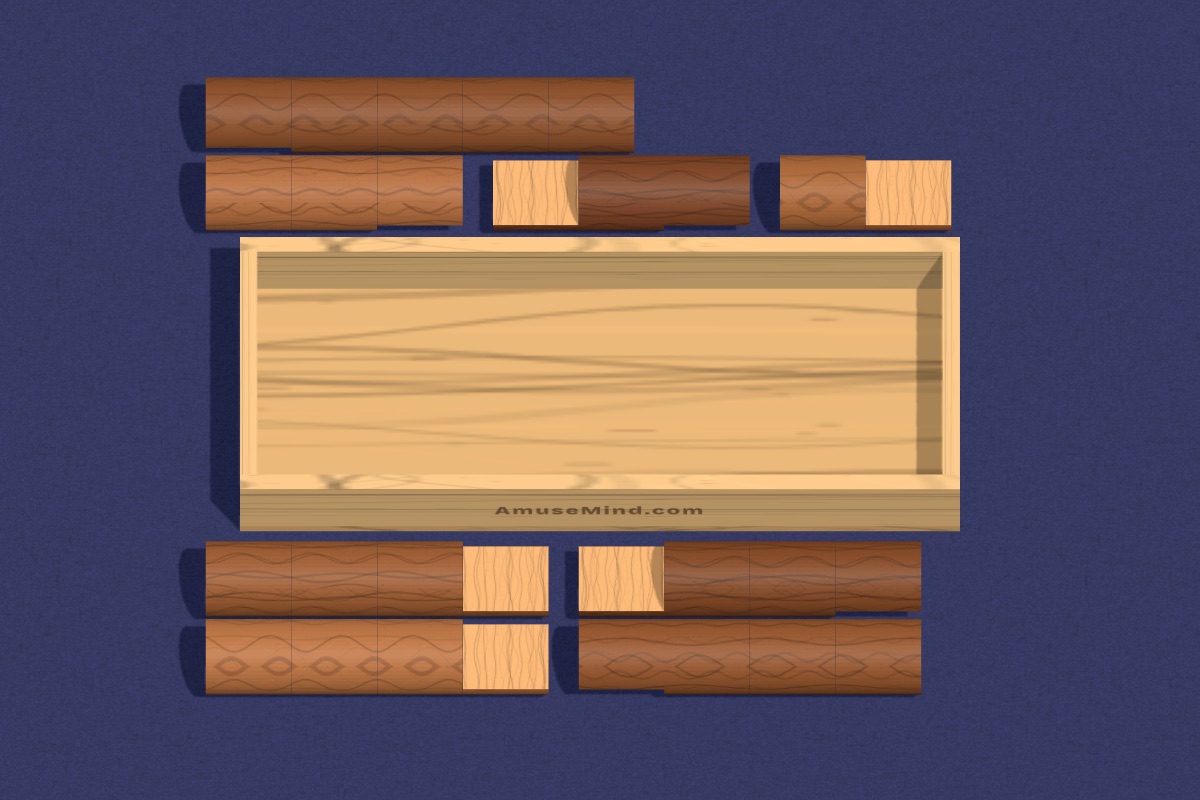
Klotski, called Hua Rong Dao in China and Hakoiri Musume in Japan, uses blocks of different sizes. The aim is to slide the big one out through a gap. Because blocks are different shapes, children have to think about which ones can pass each other, and clear a path several moves ahead.
Beginner layouts take a handful of moves. The classic layout is famously long, a good goal for a determined older child.

Road Slide: build a path
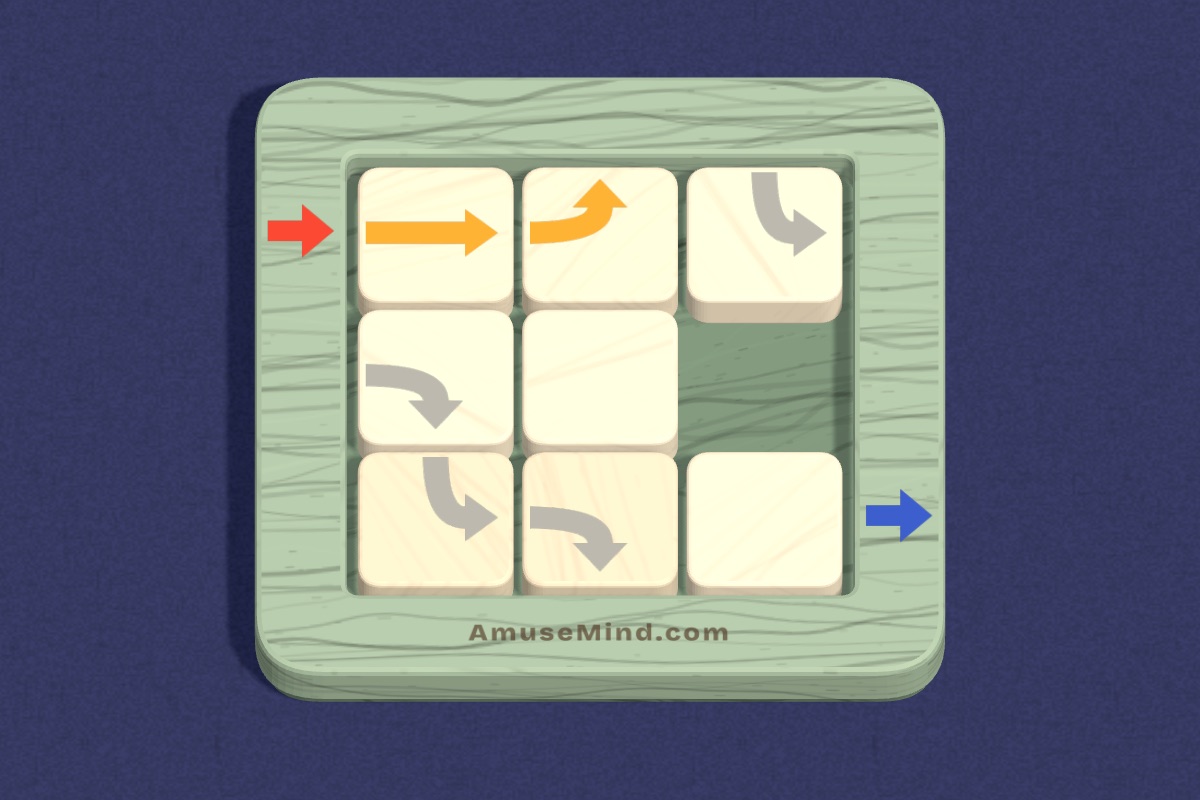
Road Slide adds a picture goal. Each tile carries a piece of road, and you slide them until a road runs unbroken from the red start to the blue finish. Children have to imagine the finished route before it exists, then work out how to get the tiles there.
Sokoban: the pushing cousin
Sokoban is not strictly a sliding-tile puzzle, but it shares the same spirit. You walk a keeper around a warehouse and push crates onto spots. You can never pull, so one bad push can leave a crate stuck in a corner. It teaches children to check the consequences before they act.

Why sliding puzzles are good for thinking
Sliding puzzles reward three habits that matter well beyond puzzles. Planning ahead: the move you make now decides what you can do in three moves’ time. Breaking a problem into parts: solving one row, one corner or one crate at a time. And patience with setbacks: sometimes you must undo good progress to make room. Children rarely meet all three in one place so clearly.
Which one at which age
Six and seven: Number Slide on 3 by 3, Hakoiri Musume on Beginner and Road Slide on Beginner. Seven and up: Sokoban on Beginner. Ten and up: the 4 by 4 and 5 by 5 number boards, longer Klotski layouts and Sokoban on Pro. Every AmuseMind puzzle shows a recommended age for each level.
Helping without giving it away
Sliding puzzles often look hopeless halfway through, because progress sometimes means moving a finished piece out of the way for a moment. If your child gets stuck, ask what the next small goal is: one tile in its place, one block out of the way, one more stretch of road. Small goals turn a big puzzle into manageable steps.
Undo is your friend. Encourage children to try an idea, watch what happens and take it back if it doesn’t help. That is how strategies are discovered.
Questions parents ask
Is every sliding puzzle solvable?
Not always: half of all random 15-puzzle arrangements can’t be solved. AmuseMind only deals solvable puzzles, made by scrambling a solved board with real moves.
What is the trick to the 15 puzzle?
Solve the top row, then the next, and leave finished rows alone. The last two rows are solved together, a column at a time.
What age can kids do sliding puzzles?
A 3 by 3 number slide or an easy Klotski layout suits many six year olds. Larger boards and Sokoban suit seven and up.