A surprising number of the world’s favourite logic puzzles were invented, named or made famous in Japan. They share a style that suits children well: one simple rule, a clean grid or board, and an answer you reach by thinking rather than guessing. Here is a tour of the best ones, with the age and level to start at.
Why Japan makes such good puzzles
From the 1980s onwards, Japanese puzzle magazines, above all the publisher Nikoli, collected and refined pencil puzzles and printed them by the thousand. Readers sent in their own designs, and editors kept the ones with a single, logical answer. That habit of “one rule, one answer, no guessing” is exactly what makes these puzzles fair for children: if you think carefully, you can always get there.
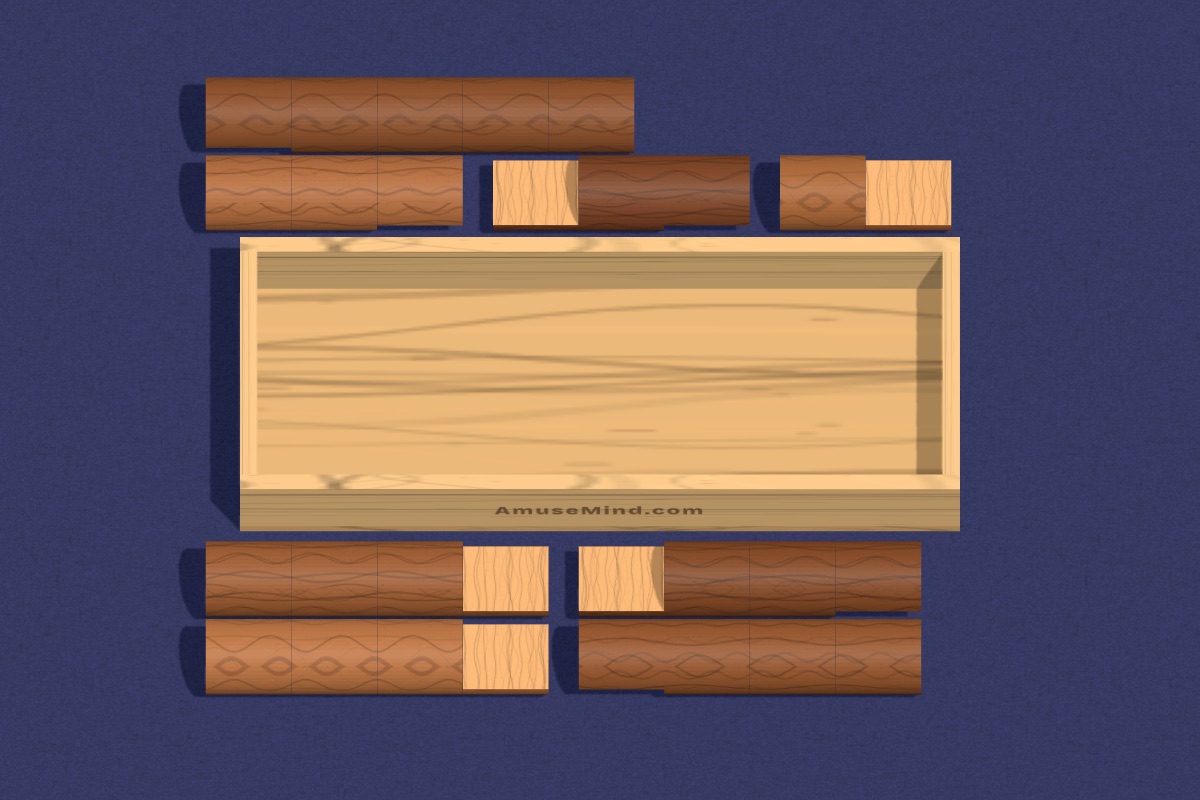
Japan also has a long tradition of wooden puzzles and craft toys, from sliding-block boxes to the secret boxes of Hakone. Both strands are worth knowing about, because they train different things: the pencil puzzles build careful logic, the wooden ones build planning and spatial sense.
Sudoku: the famous one
Sudoku grew from an American puzzle called Number Place, but it was Nikoli in Japan that gave it its name and made it a national habit, before it spread around the world in the 2000s. The rule is short: each row, column and box holds each number once.
For children, the trick is starting small. A 4 by 4 grid with the numbers 1 to 4 is reachable for many six year olds, and every AmuseMind sudoku has exactly one answer that logic alone can find. Move up to 6 by 6, then 9 by 9, only when the smaller grid feels easy.
Nonograms and Hashi: logic with a reward
Nonograms (also called Picross or Griddlers) were created in 1987, with Non Ishida and Tetsuya Nishio both credited with the idea. Number clues on each row and column tell you how many squares are filled in a run. Work them out and a picture appears, which is a lovely reward for a seven or eight year old.
Hashiwokakero, usually shortened to Hashi or called Bridges, is another Nikoli favourite. Each island has a number, and you draw bridges between islands until every number is satisfied and everything is joined up. It mixes simple counting with “this bridge must be here” reasoning.


Sokoban and Hakoiri Musume: think before you move
Sokoban, which means “warehouse keeper”, was created by Hiroyuki Imabayashi and released in 1982. You push crates onto marked spots, but you can only push, never pull. One careless push into a corner and the crate is stuck, so children quickly learn to stop and plan.
Hakoiri Musume, “the daughter in the box”, is Japan’s name for the classic sliding-block puzzle known in China as Hua Rong Dao and in Europe as Klotski. Its exact origin is debated, but it was popular across Asia and Europe by the early twentieth century. You slide wooden blocks around a box to free the big one. Beginner layouts take only a handful of moves; the classic layout takes many more.


The secret puzzle box
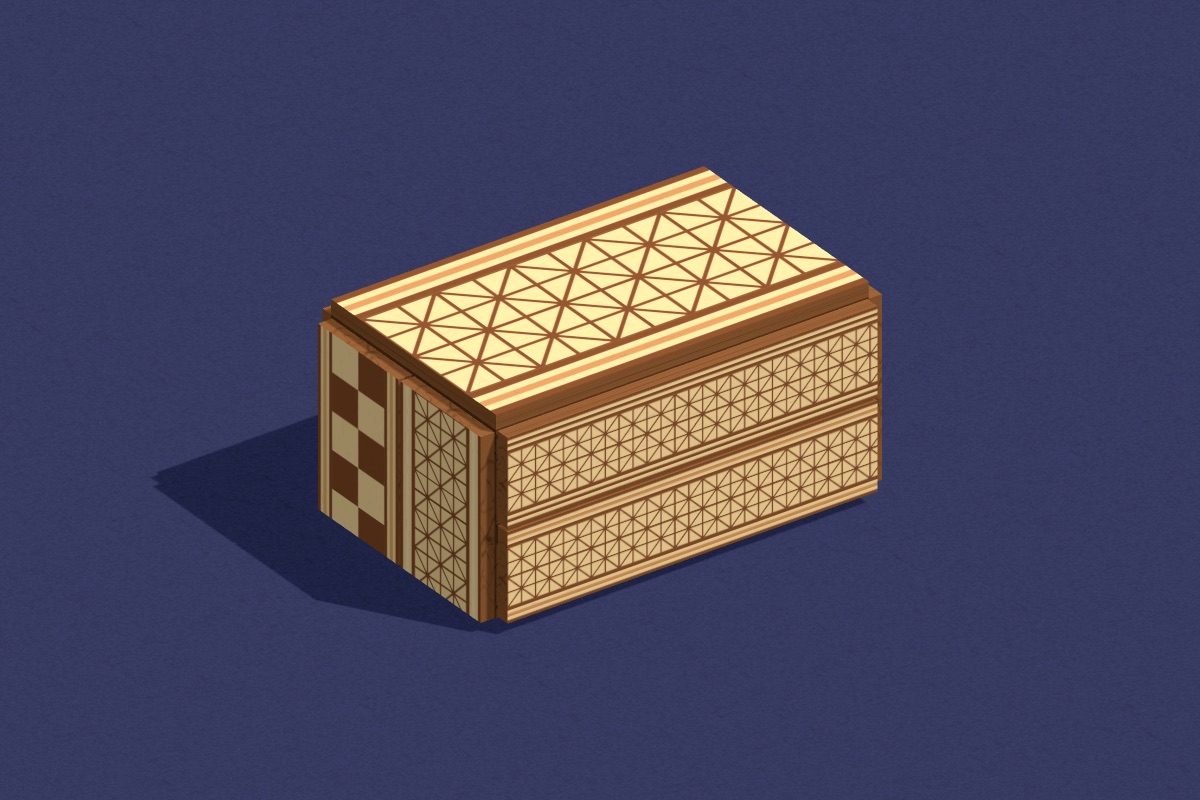
Himitsu-bako, or secret boxes, are a craft from the Hakone region of Japan. They are covered in a mosaic of different woods, and their panels slide in a hidden order. Only the right sequence opens the lid. Children love the mystery, and the puzzle quietly teaches cause and effect: this panel only moves after that one has.
Where to start
For six and seven year olds, try Sudoku on 4 by 4, Hakoiri Musume on Beginner and the Puzzle Box on Beginner. For seven and up, add Nonogram and Sokoban. Bridges suits children who already enjoy counting puzzles. Every puzzle in AmuseMind has five levels with a recommended age for each, so you can start easy and move up when it clicks.
Questions parents ask
Is sudoku Japanese?
Not originally. It grew from an American puzzle called Number Place, but the Japanese publisher Nikoli named it sudoku and made it popular, and from Japan it spread worldwide.
What age can children start Japanese logic puzzles?
Many six year olds can manage a 4 by 4 sudoku or a Beginner sliding-block puzzle. Nonograms and Sokoban tend to suit seven and up.
Do these puzzles need guessing?
Good ones don’t. AmuseMind’s sudoku and nonograms are checked to have one answer that logic alone can reach, so children learn to reason rather than guess.