Some of the oldest and best-loved puzzles in the world come from China. They are mostly hands-on: shapes to arrange, wooden pieces to take apart, blocks to slide. That makes them wonderful for building spatial sense, and they come with good stories too. Here are the classics, and one famous puzzle that only pretends to be Chinese.
Tangram: seven pieces, endless pictures
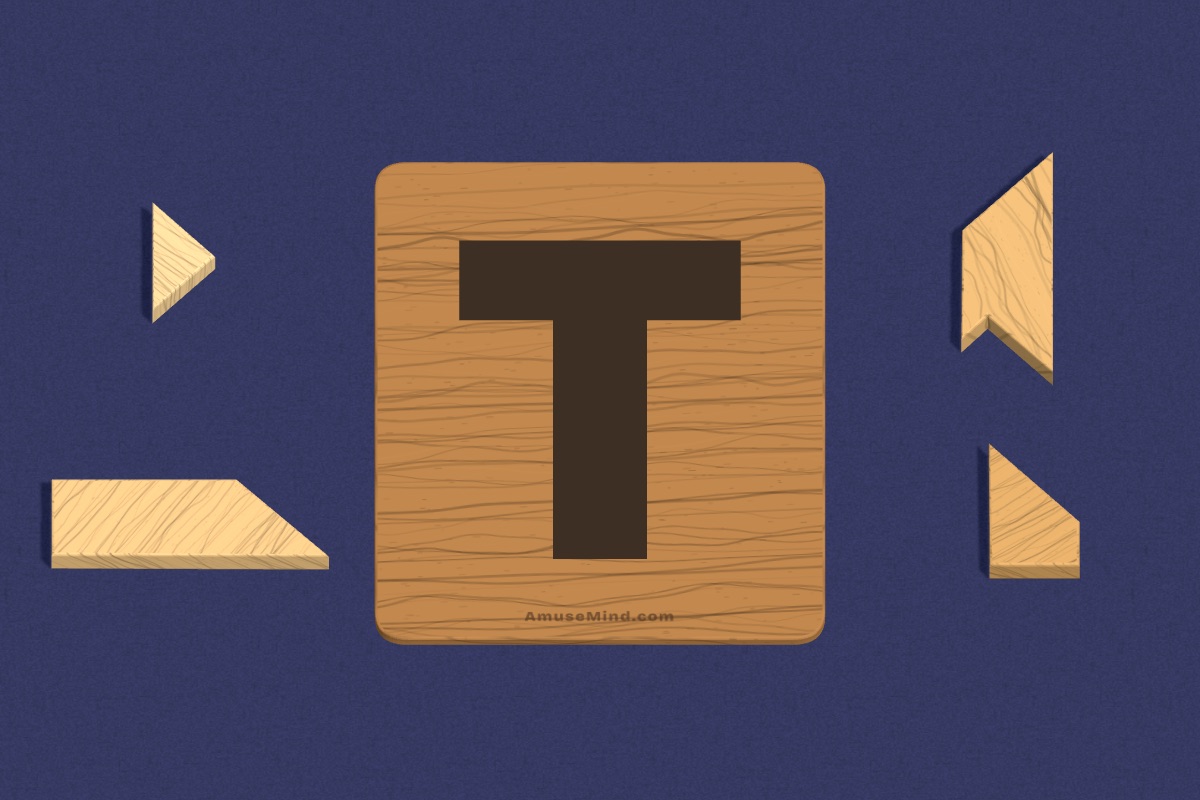
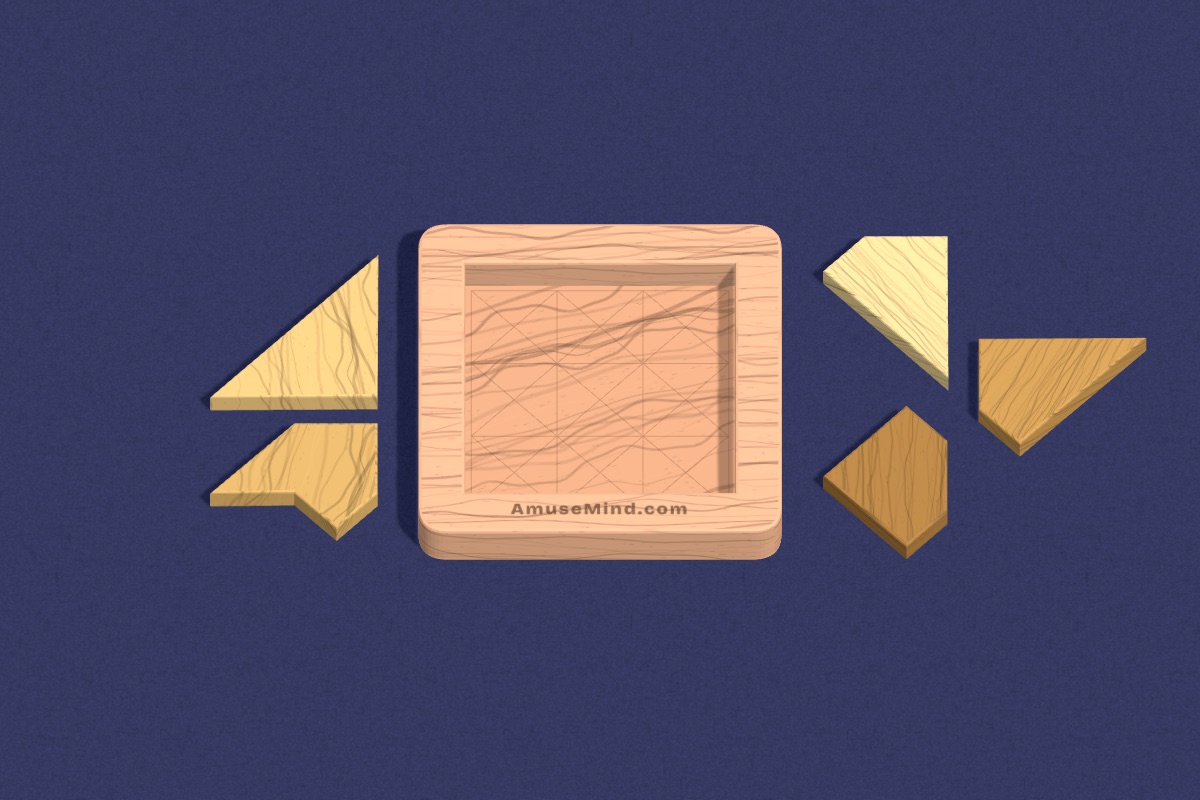
The tangram, known in Chinese as qiqiaoban, “seven boards of skill”, is a square cut into five triangles, a square and a parallelogram. Use all seven to make a cat, a boat, a running person or a letter. Its exact age is debated, but it was popular in China by the early nineteenth century and caused a craze in Europe and America soon after.
For children, tangram is the classic way to learn that shapes stay the same when they are turned, and that two small triangles can make a square. AmuseMind’s Beginner level shows each piece’s outline inside the picture, so five year olds can succeed by matching. Harder levels show only the silhouette.
The Luban lock
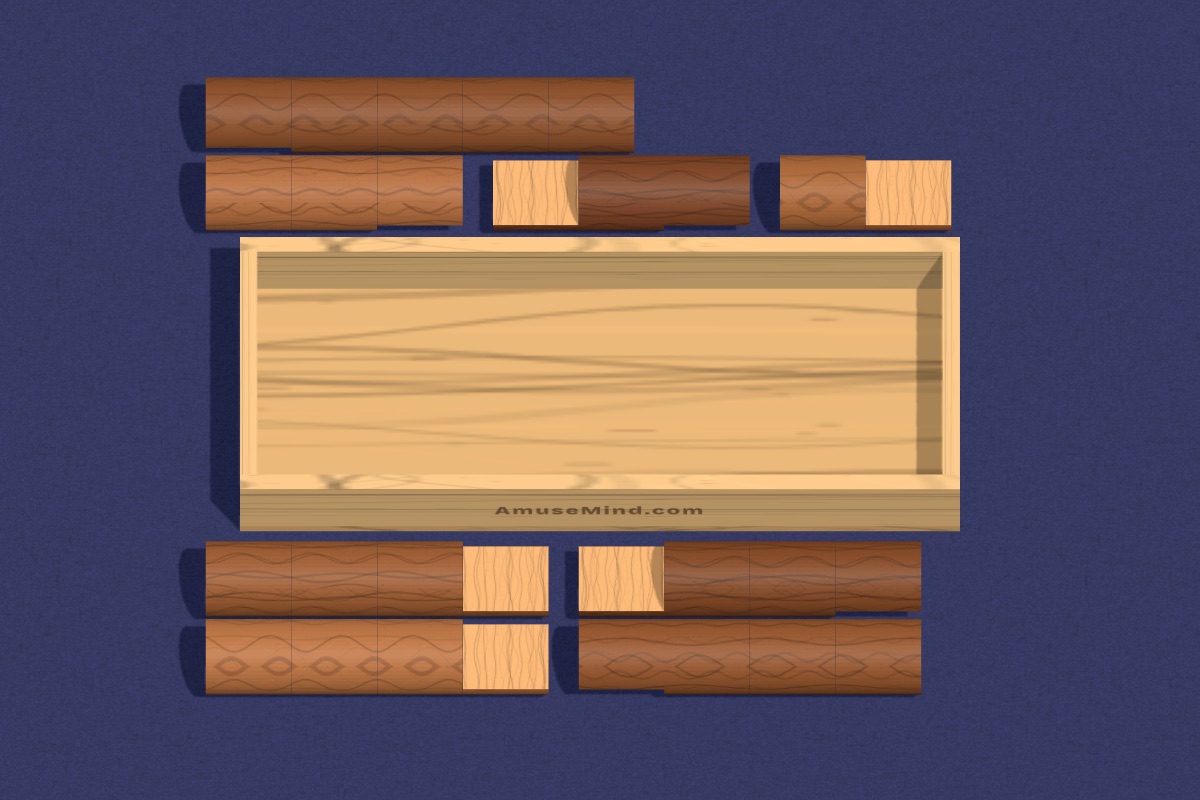
Luban locks, also called burr puzzles or Kongming locks, are interlocking wooden puzzles. Notched sticks hold each other tight, and only one sequence of slides takes them apart. They are named after Lu Ban, a legendary master carpenter of ancient China, though nobody knows exactly when the first ones were made.
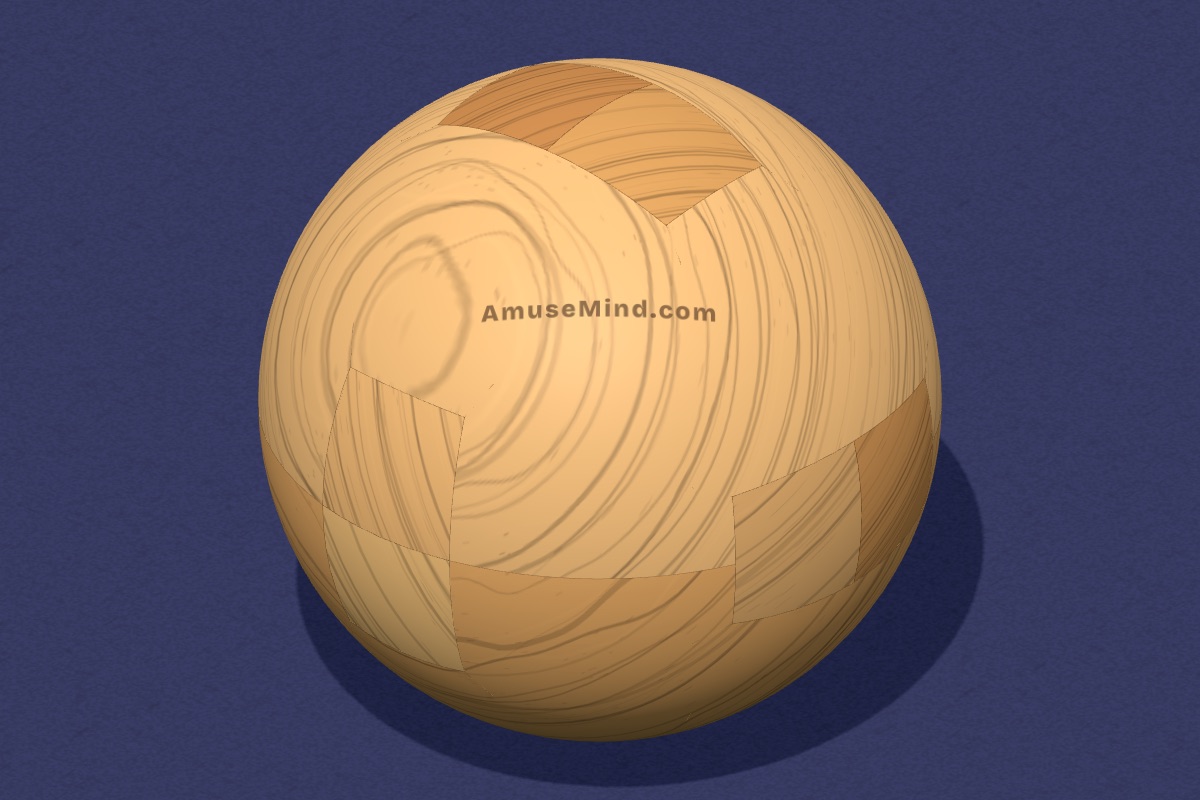
Taking one apart is a real 3D thinking task: children have to imagine pieces they cannot see and test which one can move. AmuseMind starts with a three-piece lock and works up to a wooden magic ball, with arrows that only appear in directions a piece can actually slide.
Hua Rong Dao: the sliding-block classic
Hua Rong Dao is a sliding-block puzzle named after a story from the Romance of the Three Kingdoms, in which the general Cao Cao escapes through the Huarong pass. The big block is Cao Cao; the other blocks are the generals in his way. The same puzzle is known in Japan as Hakoiri Musume and in Europe as Klotski, and its precise origin is still debated.
Children slide the blocks around until the big one reaches the exit. It teaches a useful habit: making space before you need it.

Tower of Hanoi: a French puzzle with an Asian legend
Here is a fun fact to share. The Tower of Hanoi sounds Asian, but it was invented by the French mathematician Édouard Lucas and published in 1883. Lucas sold it with a made-up legend about monks moving golden discs in a temple, and gave it an exotic name to make it more intriguing.
The puzzle itself is a gem: move a tower of rings to another peg, one ring at a time, never putting a big ring on a small one. With three rings it takes seven moves; each extra ring roughly doubles the work. It is the perfect introduction to breaking a big problem into smaller ones.

Where to start
Five and six year olds: Tangram on Beginner. Six and up: Hua Rong Dao (Hakoiri Musume) on Beginner and Tower of Hanoi with three rings. Seven and up: the Luban lock on Beginner, moving towards the magic ball as confidence grows. All are free to try in the browser, with five levels each.
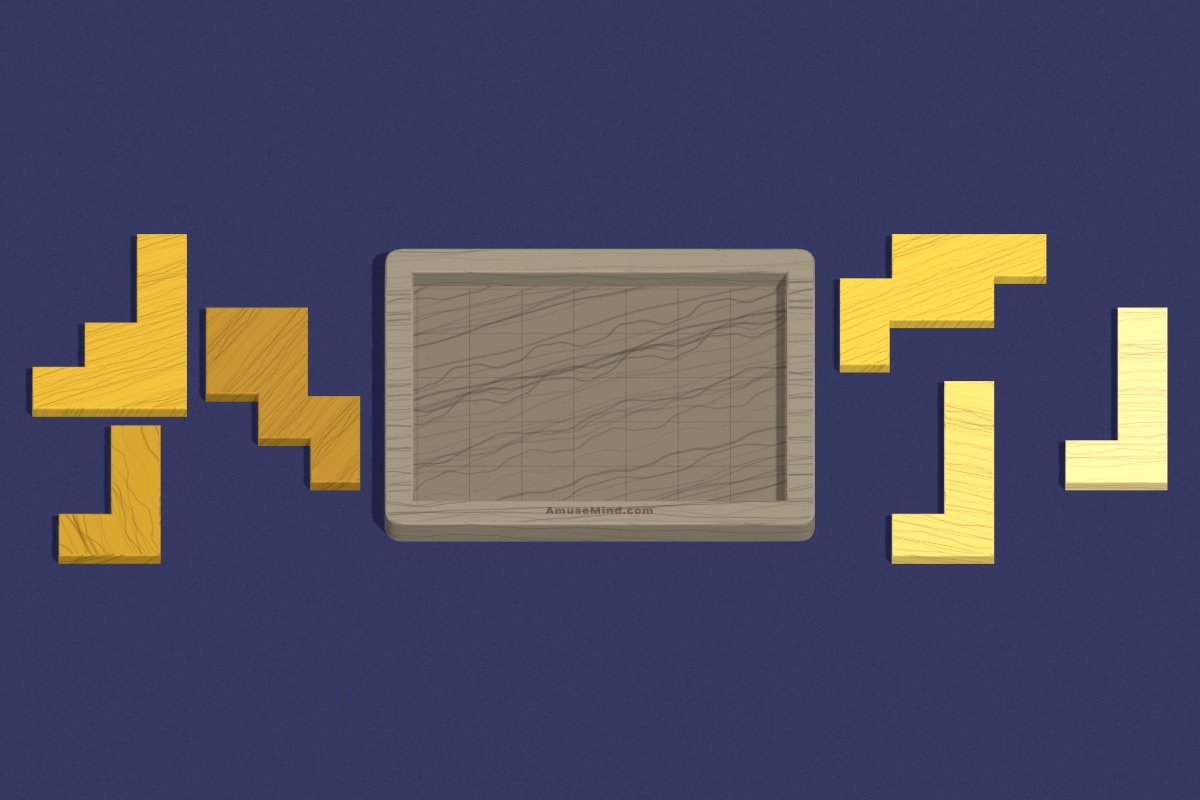
If your child enjoys these, the trays in AmuseMind (rectangle, square, triangle and more) build on the same tangram skills of turning and fitting shapes.
Questions parents ask
Is the Tower of Hanoi from China or Vietnam?
Neither. It was invented by the French mathematician Édouard Lucas and published in 1883, with a made-up legend to make it more exciting.
What age is tangram for?
With outlines shown, many five year olds can do simple tangram pictures. Silhouette-only pictures suit around eight and up.
Are Luban locks too hard for children?
The full magic ball is hard, but a three-piece lock is a good start for seven and eight year olds, especially when the puzzle shows which way each piece can move.