Some children light up at numbers and patterns. Puzzles are a wonderful way to feed that curiosity without more worksheets: they ask the same questions mathematicians ask (what is the rule, can I prove it, is there a pattern) in a playful package. Here are the best ones for maths-loving kids.
Number logic: sudoku and Bridges
Sudoku is not really about arithmetic; it is about logic with numbers as labels. That is exactly why it suits maths-minded children: they learn to rule things out and to be sure of a step before they take it. Start at 4 by 4 and work up to 9 by 9.
Bridges (Hashi) does use counting: each island needs a set number of bridges, so children add up what is still needed and spot the bridges that must be there.

Patterns: Tower of Hanoi
The Tower of Hanoi hides one of the prettiest patterns in recreational maths. Three rings take at least 7 moves, four take 15, five take 31. Each extra ring doubles the moves and adds one: the fewest moves for n rings is 2 to the power n, minus 1.
Children love discovering this themselves. Play three, then four, then five rings, write down the best move counts, and ask “what comes next?” The puzzle shows the fewest possible moves, so they can check their prediction.

Logic grids: nonograms
Nonograms turn number clues into a picture. A clue of “3 1” means a run of three filled squares, a gap, then one. Children reason about where those runs can and can’t go, which is careful case-by-case thinking, very close to how proofs work.

Order and parity: the sliding number puzzle
The sliding number puzzle has a famous secret: half of all random arrangements cannot be solved. Why is a question older children can explore (it has to do with counting how many pairs of tiles are out of order). Younger ones simply enjoy discovering the row-by-row method.

Geometry: tangram, trays and block design
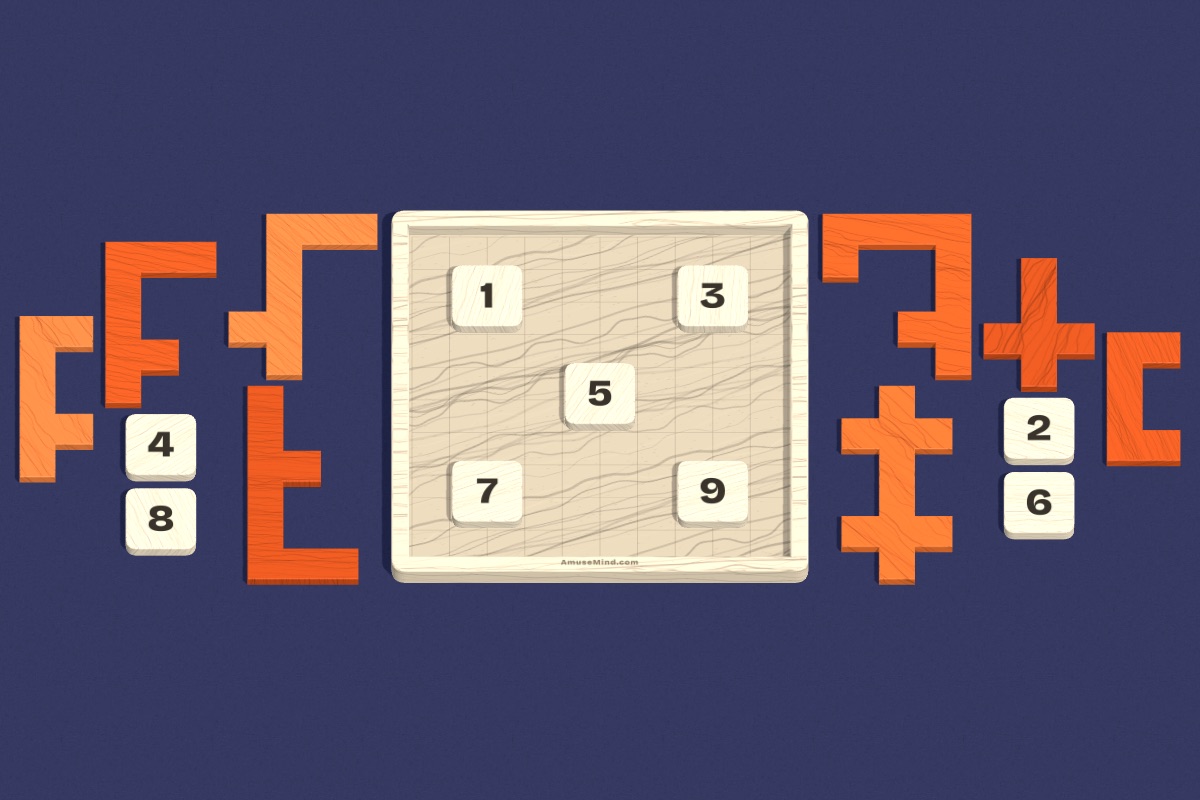
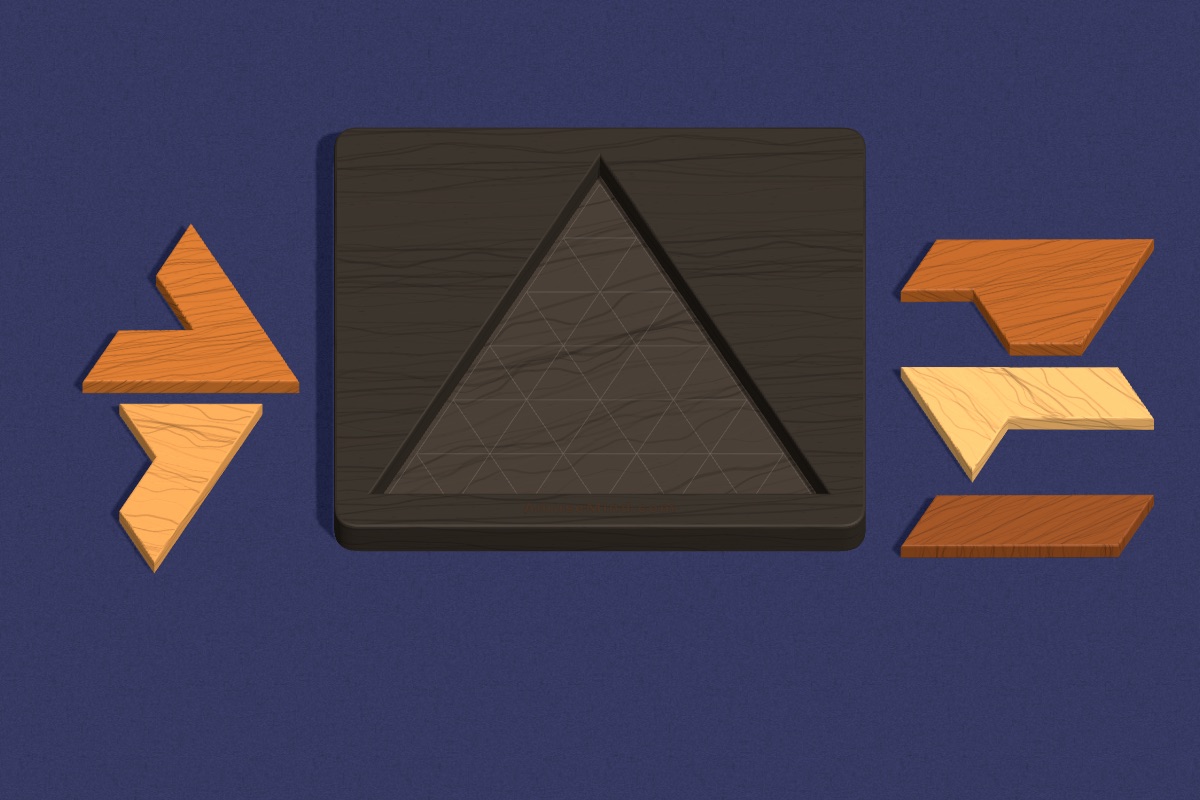
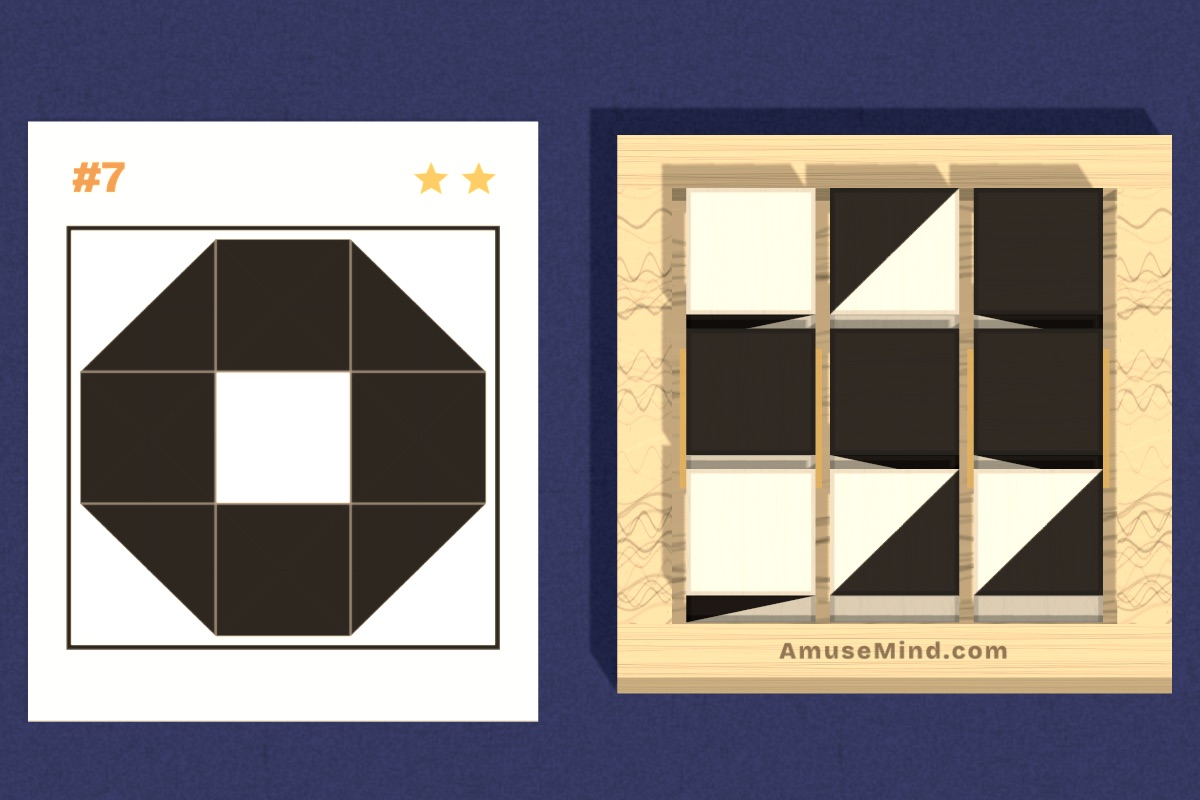
Maths is also shapes. Tangram shows that area stays the same however you arrange the pieces. The triangle and diamond trays are built from equal triangles, and Hidden Blocks asks children to see a design as parts. These build the spatial reasoning that geometry later depends on.

Keeping it playful
Resist turning puzzles into lessons. Let your child find the pattern; ask “do you think that always works?” rather than explaining. Maths-loving children often enjoy the hardest levels most, so let them try Hacker or Demon early and step back down if it gets frustrating.
Questions to ask while they play
A few open questions turn a puzzle into a small investigation. Is there a move that always works? What is the fewest number of moves, and how could you be sure? Would it still work with a bigger board? What changes if you start from a different corner?
Encourage your child to write down their results: move counts on Tower of Hanoi, which sudoku squares they solved first, the order that cleared a sliding puzzle. Recording and comparing is exactly what mathematicians do, and children are often delighted to find their own rule before being told it.
Questions parents ask
Is sudoku good for maths?
It builds logical reasoning rather than arithmetic: ruling out options and being sure of each step, which is central to maths.
How many moves does the Tower of Hanoi take?
The fewest moves for n rings is 2 to the power n minus 1: 7 for three rings, 15 for four, 31 for five, 127 for seven.
Will puzzles improve my child’s maths grades?
There is no guarantee, and puzzles aren’t a replacement for maths lessons. They do practise reasoning, patterns and persistence in a way many children enjoy.