The Common Core State Standards for Mathematics include eight Standards for Mathematical Practice: habits of mind that cut across every grade. They are hard to “teach” directly, but they show up naturally when students work on a good puzzle. Here is how puzzles connect to each practice, with prompts you can use in class.
MP1: Make sense of problems and persevere in solving them
This is the practice puzzles exercise most directly. A Sokoban level or a sliding-block puzzle can’t be solved by recalling a procedure; students have to understand the goal, try something, notice it failed, and try again. Prompt: “What is the puzzle asking? What have you tried so far?” Celebrate the restart, not just the finish.


MP2 and MP3: Reason abstractly, and construct arguments
Logic puzzles like Sudoku, Nonogram and Bridges are small arguments: every filled square should have a reason. Ask students to justify one move to a partner: “How do you know this must be a 3?” That is MP3 in miniature. MP2 shows up when students move between the concrete board and a general rule, such as “a row with a clue of 10 in a 10-wide grid must be full”.



MP4 and MP5: Model, and use tools strategically
MP4 is about representing a situation mathematically. Tower of Hanoi invites students to record moves in a table and look for a rule. MP5 asks students to choose tools well: when is it worth sketching a tangram on paper, or using Undo to test an idea and come back? Talk explicitly about Undo as a tool for experimenting, not a cheat.


MP6: Attend to precision
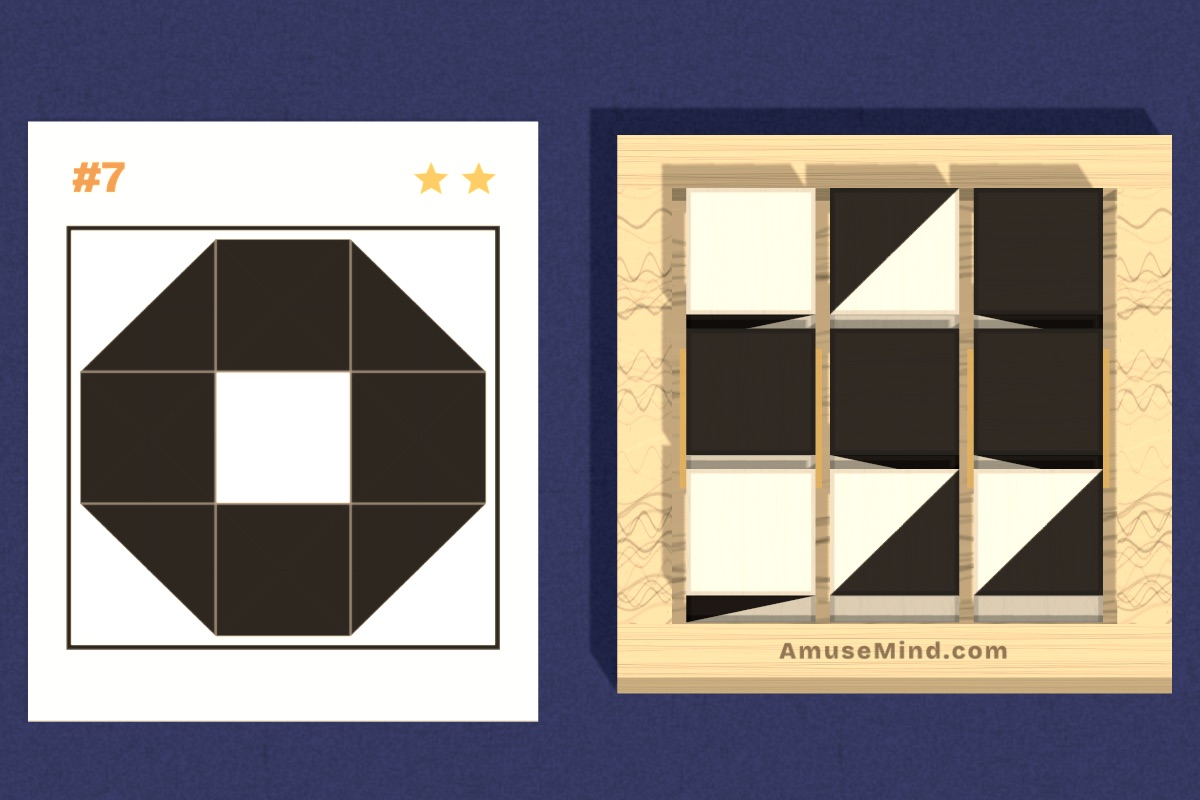
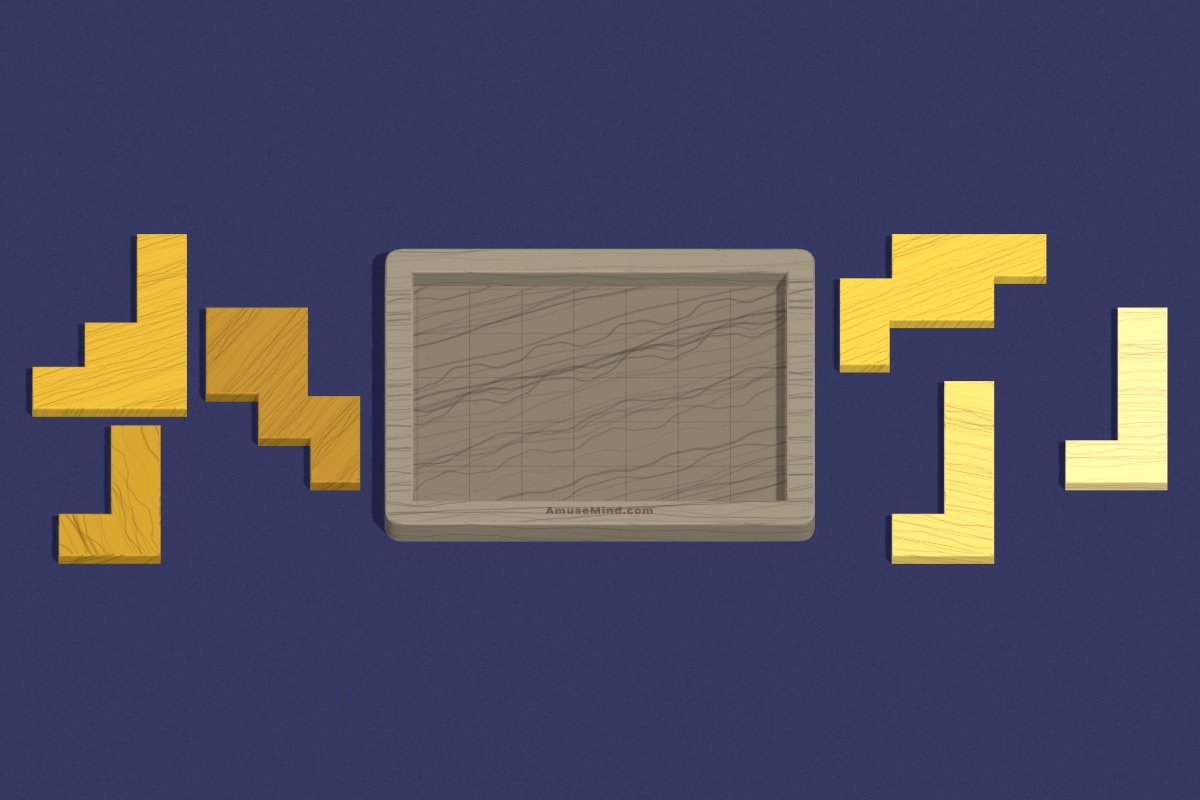
Spatial puzzles reward precision: a tray piece fits exactly or not at all, and a Hidden Blocks card is matched only when every face is turned correctly. Encourage precise language too: “rotate a quarter turn clockwise”, “reflect it”, “the long edge”. Ask students to give a partner instructions without pointing.
MP7: Look for and make use of structure
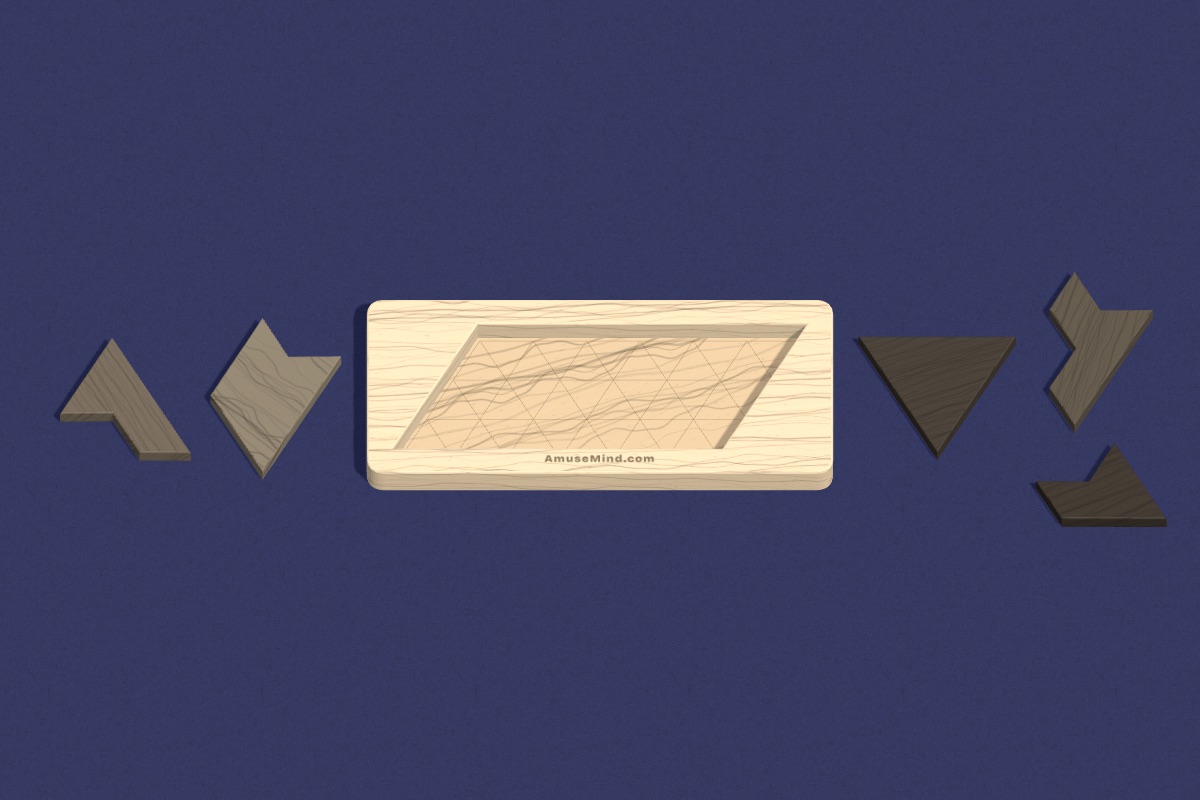
Many puzzles hide structure. Tangram pieces relate by area: two small triangles make the square, the medium triangle, or the parallelogram. Sudoku boxes, rows and columns interlock. The 15-style sliding puzzle is usually solved by fixing the top row, then the left column, and shrinking the problem. Prompt: “What stays the same? What smaller puzzle is hiding inside this one?”

MP8: Look for and express regularity in repeated reasoning
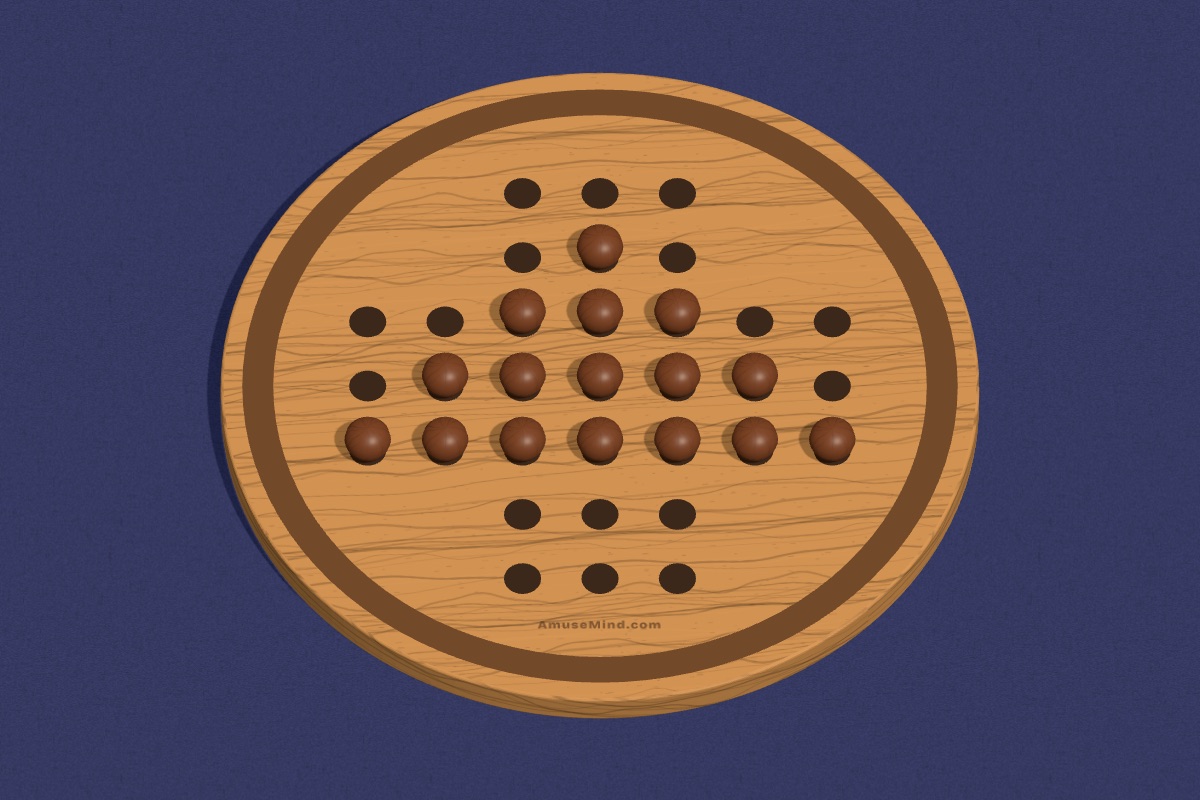
Tower of Hanoi is the classic example. With 1, 2, 3 and 4 rings the fewest moves are 1, 3, 7 and 15. Students who notice “double and add one” can predict any size, and older students can write it as 2ⁿ − 1. Peg Solitaire and Number Slide offer similar “what keeps happening?” moments.
Using puzzles in class
Keep sessions short, 10 to 15 minutes, and end with talk. A quick routine: two minutes of goal-setting, eight of play, five of sharing one strategy. Every AmuseMind puzzle is free to try in the browser with no student accounts, so it works on classroom Chromebooks, iPads or an interactive board for whole-class solving.
Questions teachers ask
Are these puzzles aligned to Common Core content standards?
They are not tied to specific content standards. They connect best to the Standards for Mathematical Practice, the habits of mind that apply across grades.
Which practice do puzzles support most?
MP1, making sense of problems and persevering, along with MP7 and MP8 when students look for structure and patterns.
Do students need accounts?
No. Puzzles play in the browser without student accounts, sign-up or ads. Class features like class codes and reports are in early access through a demo request.
