Young children are natural problem solvers, but they need puzzles with a visible goal, big pieces and a quick, clear finish. These activities fit into a carpet session, a learning centre or the last ten minutes of the day, and they build the early logic and spatial skills that later maths rests on.
What K–2 children are ready for
Between about five and eight, children move from trial and error towards trying things on purpose. They can match a shape to a hole, turn a piece once or twice in their heads, follow a single rule (“each row has every number once”) and start to explain why something works. They find it hard to hold several steps in mind, so the best activities have one rule and a goal they can see.
Shape and space
Start with Shape Match: square tiles with knobs shaped like hearts, stars and keys that slot into matching holes. It is the gentlest possible spatial puzzle and works well projected for the whole class, with children taking turns to say which tile goes where.
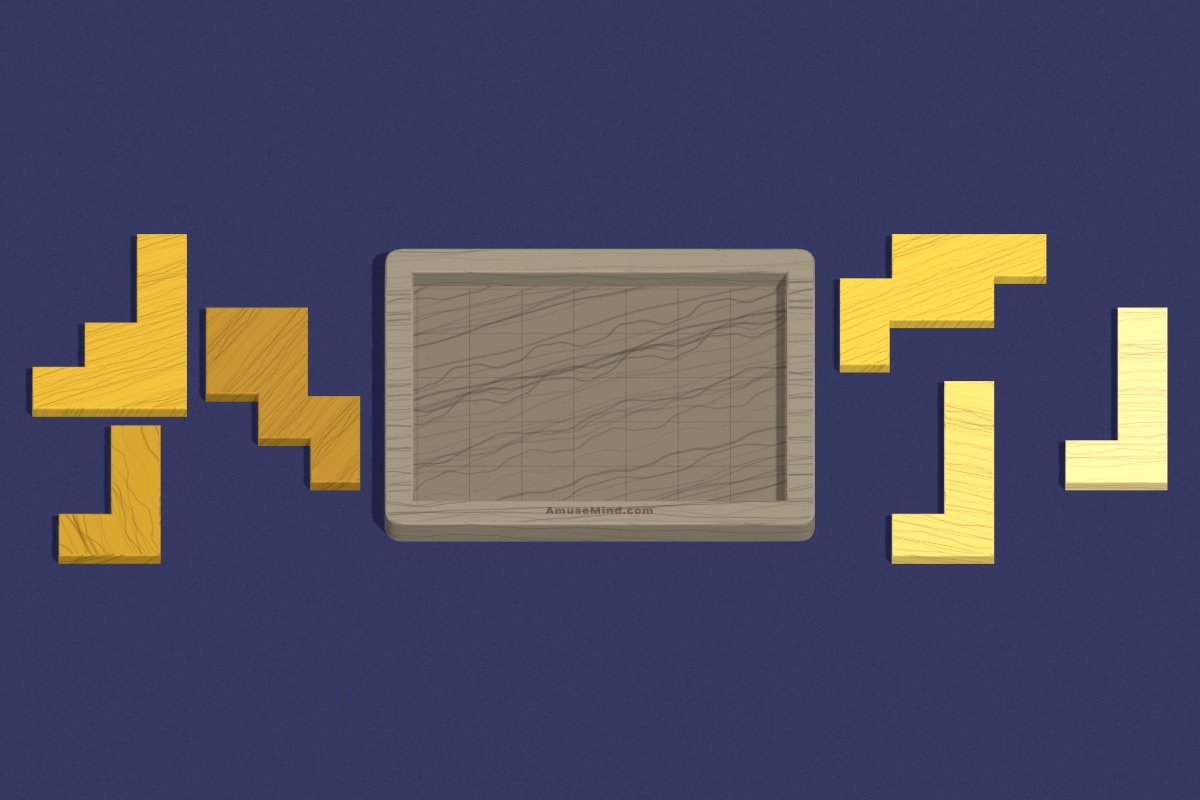
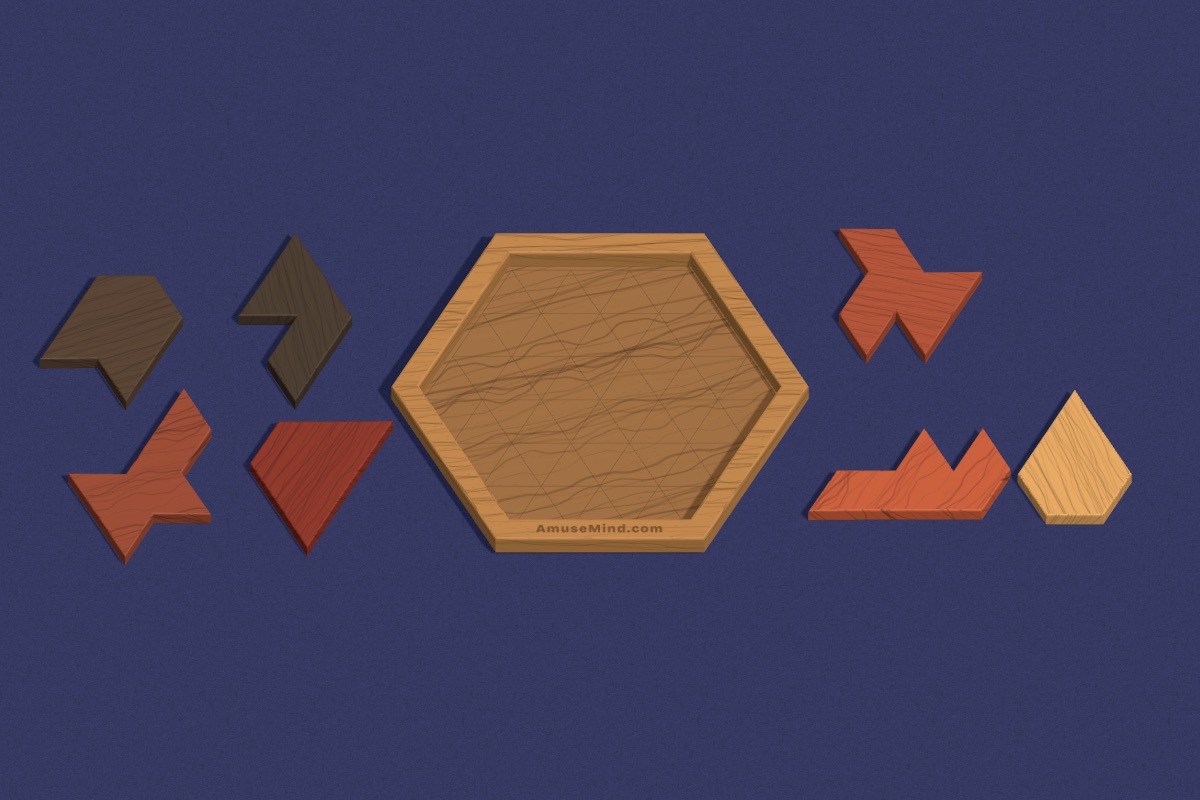
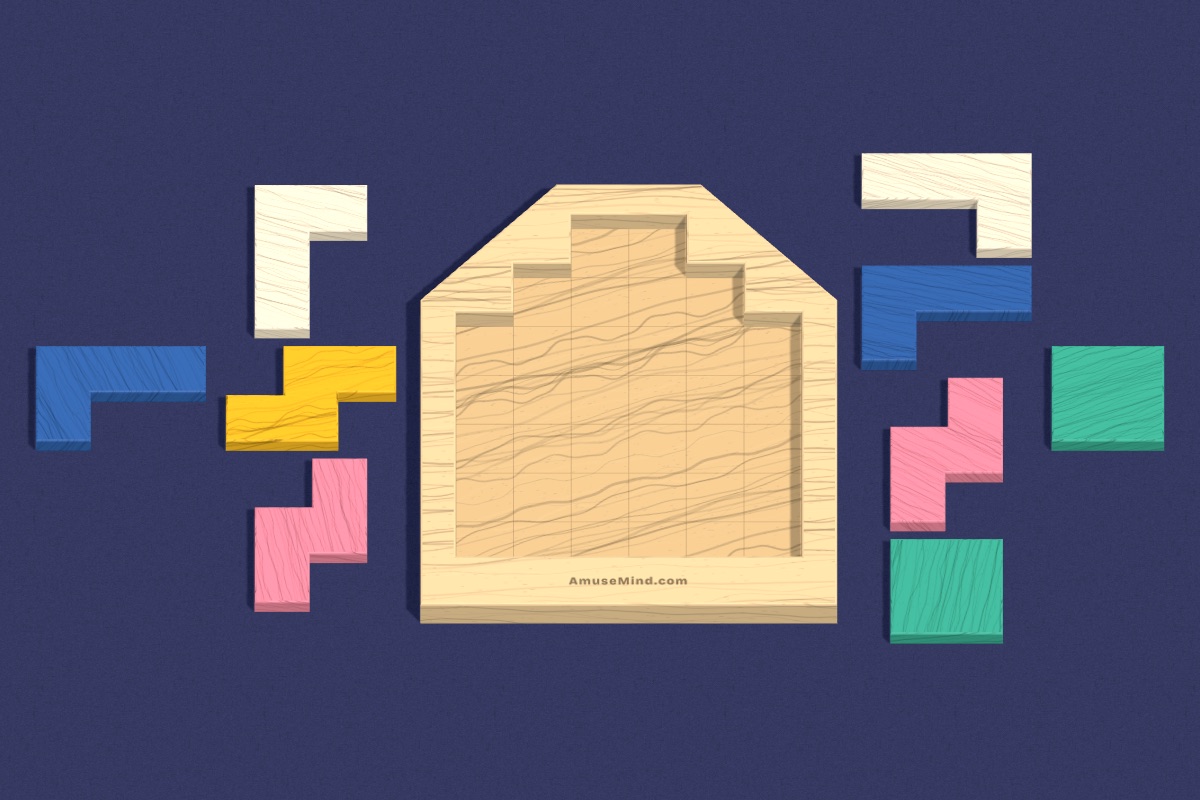
Move on to tangram with outlines shown, and to the Rectangle Tray and Hexwood on Beginner, where every piece starts the right way round. Ask “how do you know it fits?” and “what would happen if you turned it?” to get children talking about shape.


Copying patterns
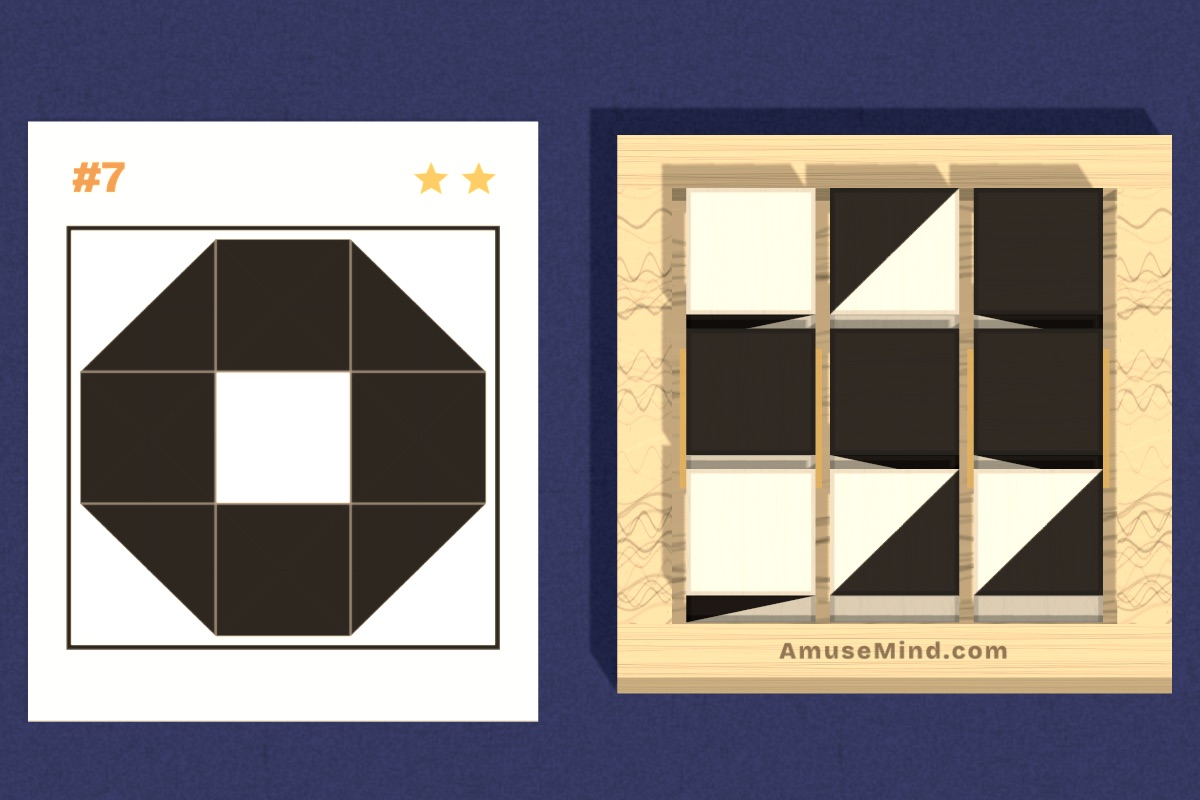
Hidden Blocks asks children to copy a black-and-white picture by turning patterned cubes. At Beginner it is four cubes. It is a lovely partner activity: one child describes a cube (“the black triangle points up”), the other turns it.
First rules and first plans
By grade 1 and 2, many children are ready for a 4 by 4 sudoku with the numbers 1 to 4 and for Tower of Hanoi with three rings. Both have one clear rule and reward thinking a step ahead. Model the first one aloud on the board (“this square can’t be 2, because there’s already a 2 in this row”), then let pairs try.



Classroom routines that work
Puzzle of the day: put one puzzle on the board at the start of a lesson and solve it together in five minutes. Learning centre: one device, one puzzle, a timer and a partner. Think-aloud: ask a child to explain their move before they make it. Celebrate strategies, not speed.
Every AmuseMind puzzle is free to try in the browser, with no student accounts, no sign-up and no ads, so you can put a puzzle on screen in seconds. It runs on classroom tablets, Chromebooks, laptops and interactive boards. Class features such as class codes, assignments and progress reports are in early access: request a demo from the For schools page if you’d like to try them.
Talking about thinking
At this age, the words matter as much as the solving. Encourage children to say what they notice: this piece has a straight edge, that number is already in the row, the big ring has to go first. Sentence starters help: “I think it goes here because…”, “I know it can’t be … because…”.
Praise strategies and effort rather than speed. “You turned it three times until it fitted, that was patient” teaches more than “well done, you were quick”. Children who learn that being stuck is normal become much braver puzzlers.
Questions teachers ask
Do kindergarteners need accounts?
No. Every puzzle plays in the browser with no student accounts or sign-up, and there are no ads.
Which puzzle should I start with for kindergarten?
Shape Match, then tangram with outlines shown and the Rectangle Tray on Beginner.
How long should a puzzle activity last?
Five to ten minutes is plenty at this age. Finishing one puzzle together beats rushing through several.
