At five and six, children are starting to hold a small plan in their heads, notice that shapes can be turned, and keep going a little longer when something doesn’t work first time. The right puzzle meets them exactly there: easy to start, clear when it’s finished, and just tricky enough that the “aha” feels earned.
What’s growing at this age
Five and six year olds are moving from trial and error towards trying something on purpose. They can usually picture a simple shape turned once or twice, match a shape to the hole it fits, and follow a rule like “every piece must go in the tray”. What they find hard is holding several steps in mind at once, or undoing a move that felt right.
That makes this a great age for puzzles with chunky pieces, a visible goal and quick feedback. Every time a piece snaps in or refuses to fit, a child learns something about shape and space without anyone explaining it.
What makes a good puzzle for this age
Look for a goal a child can see at a glance (fill the tray, copy the card, match the shapes), big pieces that are easy to drag with a small finger, and a puzzle that ends in a few minutes. Turning pieces is fine; flipping them over is usually a step too far for now.
Avoid anything with timers that nag, streaks to keep up, or ads that pull attention away. At this age the goal is a calm, satisfying finish, not a high score.
Puzzles to start with, and the level to pick
Start every puzzle on Beginner. In AmuseMind, Beginner keeps pieces the right way round where that matters, so the only question is where things go.
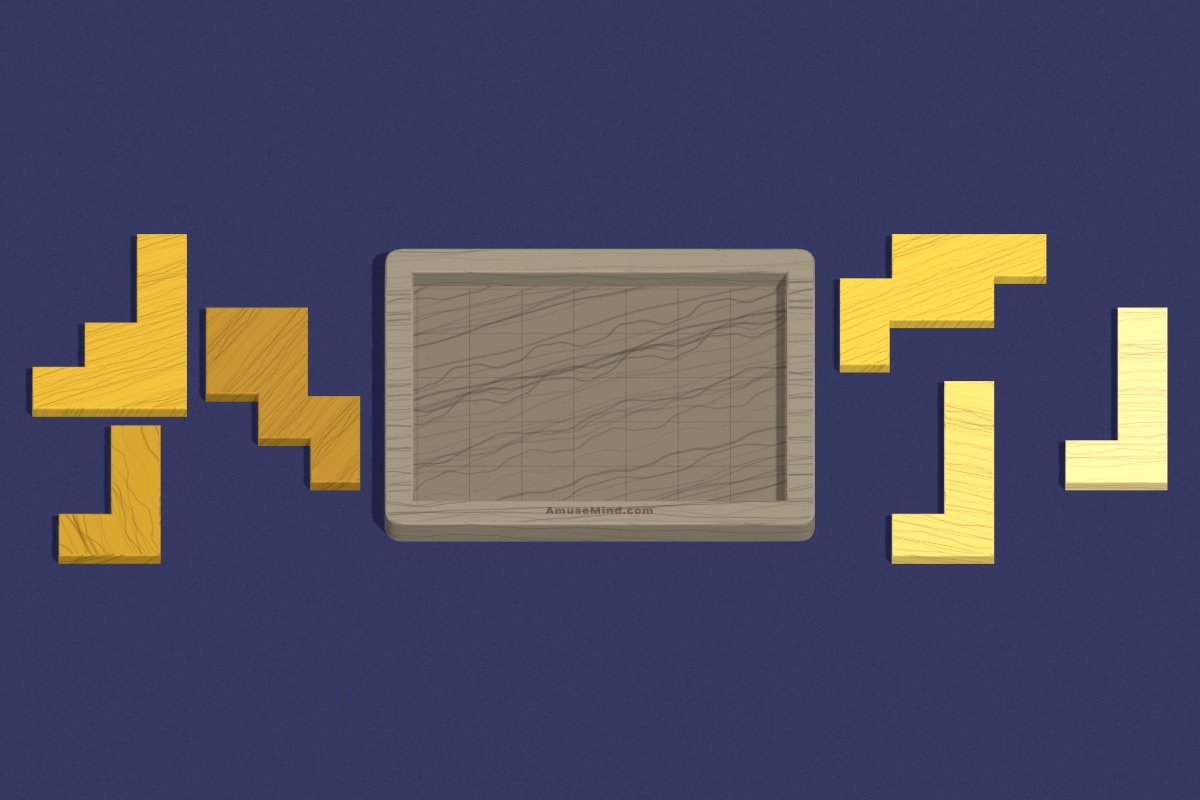
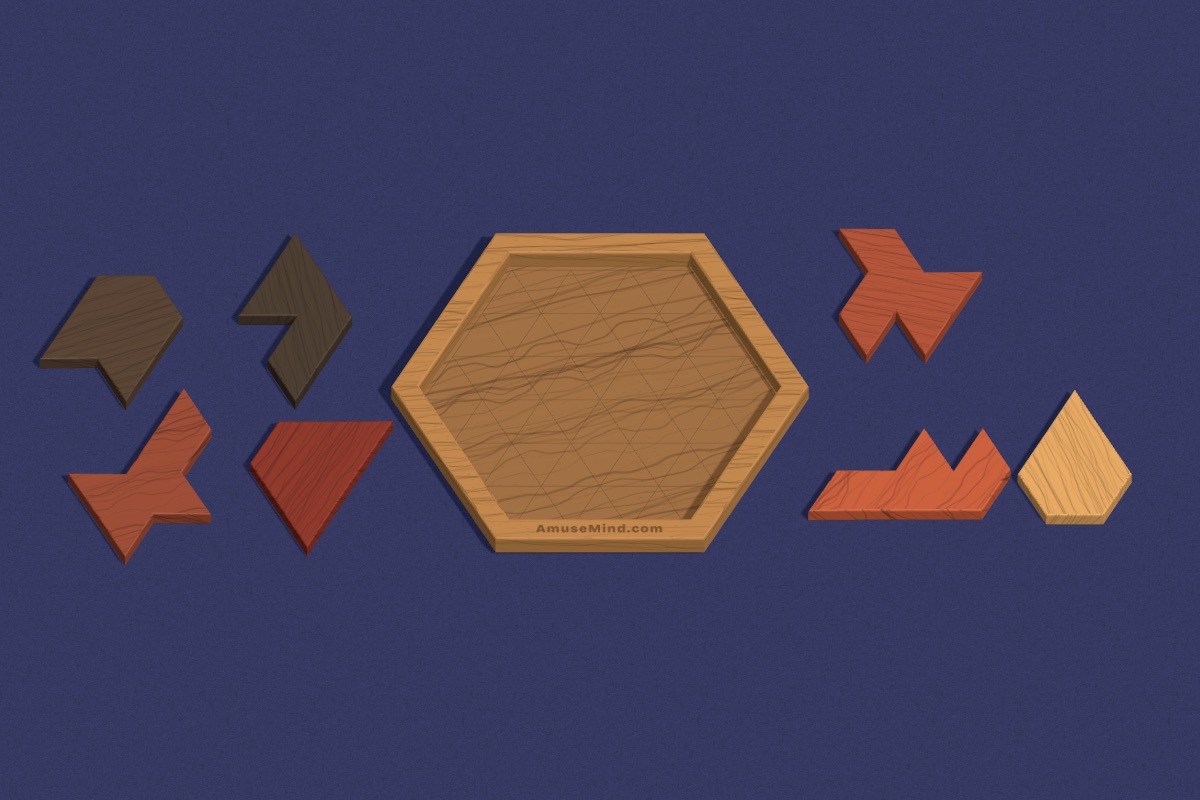
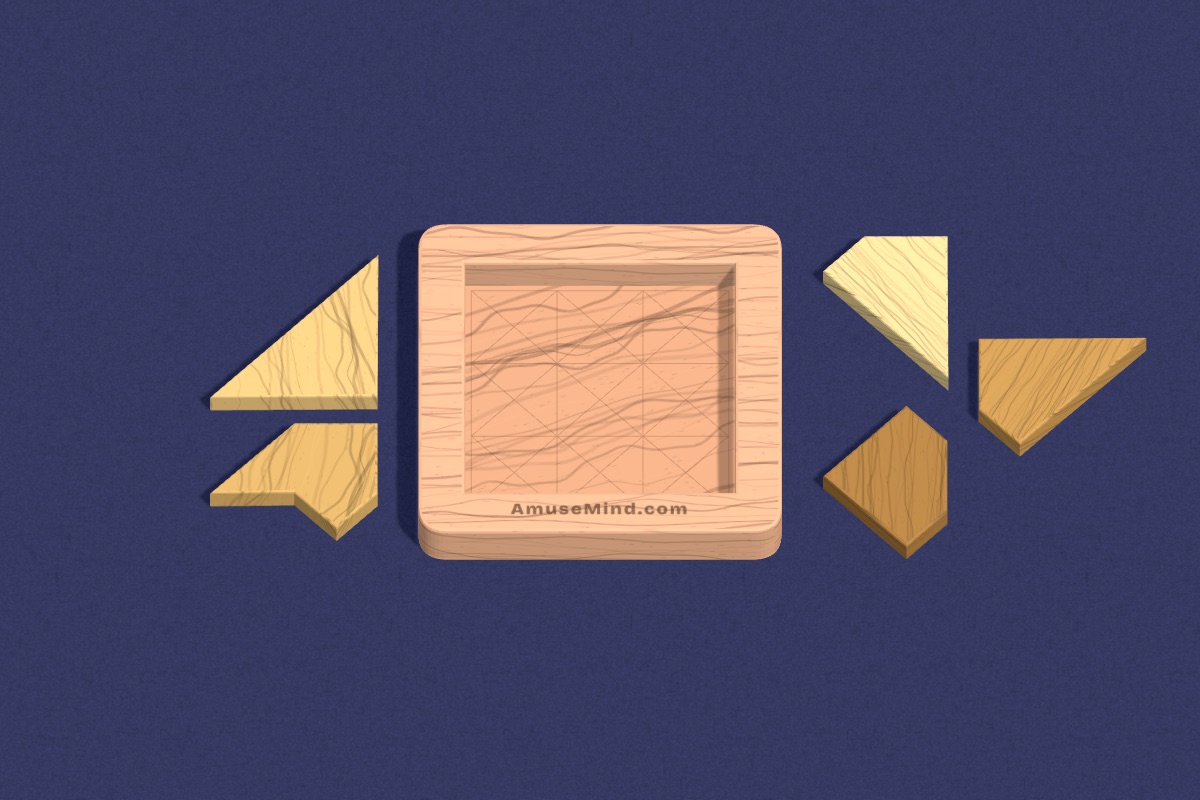
Shape Match is the gentlest start: square tiles with knobs shaped like hearts, arrows and keys that slot into matching holes. Rectangle Tray and Hexwood ask children to fill a tray with wooden pieces, which builds a real feel for how small shapes make a bigger one. Tangram on Beginner shows each piece’s outline inside the picture, so a five year old can succeed by matching shapes before learning to see them unaided.
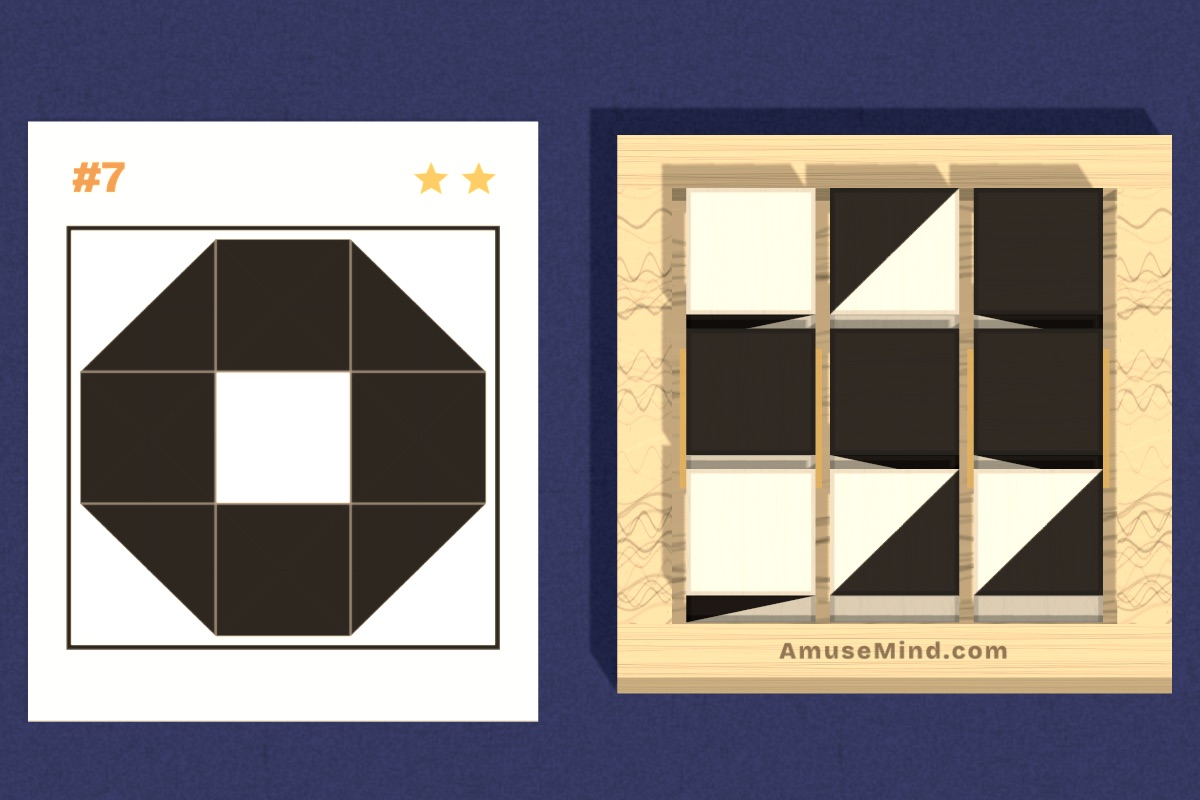
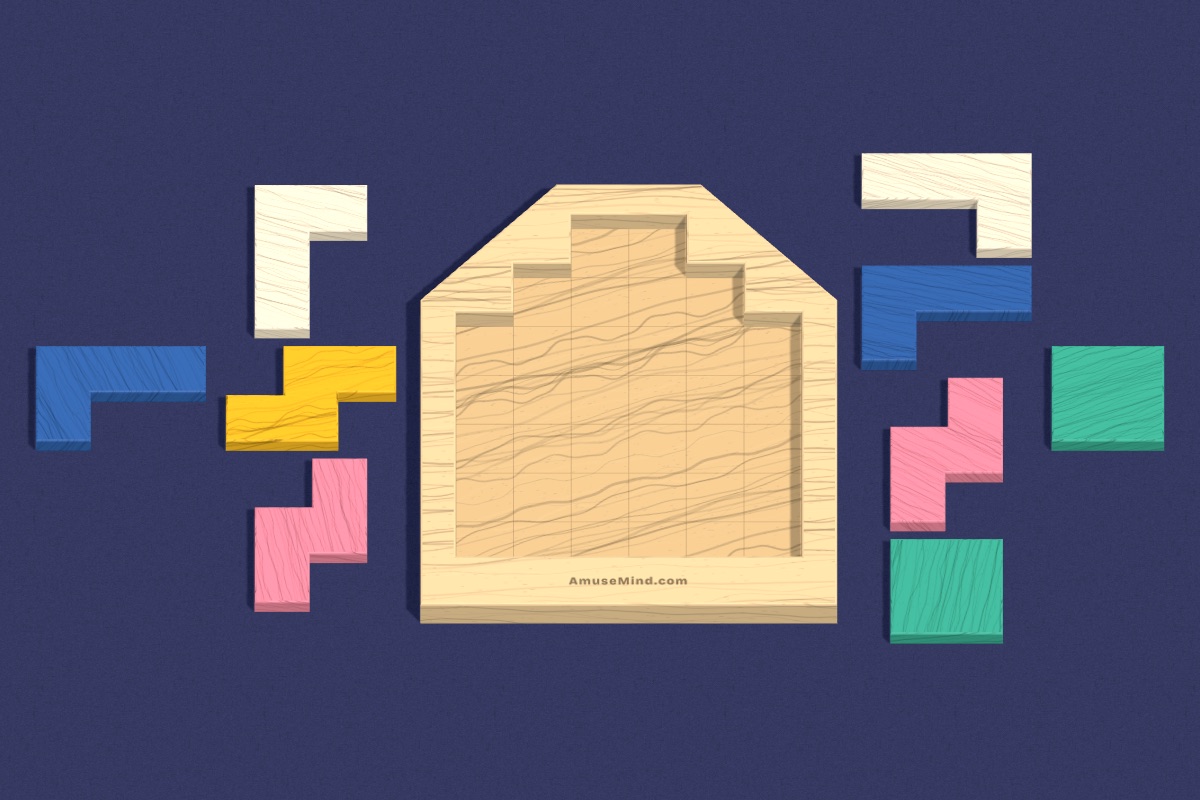
Hidden Blocks starts at a 2 by 2 card: turn four black-and-white blocks until they copy the picture. Block House lets children pack coloured blocks into a house shape, a satisfying “tidy up” puzzle many children love.


For a confident six year old
Once Beginner feels easy, try Intermediate on the same puzzle rather than jumping to a new one: more pieces, and sometimes pieces that start turned. Six year olds who enjoy numbers often like Number Slide on its 3 by 3 board, and Tower of Hanoi with three rings is a lovely first taste of planning ahead.



How to play together, and when to step back
Sit with them for the first puzzle. Ask questions instead of pointing: “Which piece is the biggest?” “Where could the pointy one go?” Then let them drive. If they get stuck, wait a moment before helping; the pause is often where the thinking happens.
When you do help, help with one piece, not the whole puzzle. A good rule is to give the smallest nudge that gets them moving again.
Too hard or too easy?
Too hard looks like random dragging, frustration, or asking you to do it. Drop back a level or switch to a puzzle with bigger pieces. Too easy looks like finishing in under a minute without thinking. Move up one level, not two.
A puzzle that takes a few tries and ends with a grin is exactly right.
Questions parents ask
How long should a 5 year old play puzzles?
A few puzzles at a time is plenty. Most AmuseMind puzzles take 5 to 15 minutes and have a clear finish, which makes it easy to stop after one or two.
Can a 5 year old play without reading?
Yes. The puzzles are about shapes and placing pieces, so children can play by looking and trying. A grown-up can read the short instructions the first time.
Is it free?
Every AmuseMind puzzle is free to try in the browser, with no sign-up and no ads. Family Pro adds the hint coach, solutions and progress notes for parents.

