A polyomino is a shape made of squares joined edge to edge. Two squares make a domino, four make a tetromino (the shapes in falling-block games), and five make a pentomino. Packing them into a tray is a classic spatial puzzle.
The families
There are five different tetromino shapes if you’re allowed to flip them, or seven if you’re not (the L and J, and the S and Z, are mirror images). There are twelve pentominoes, usually named after letters they look like: F, I, L, N, P, T, U, V, W, X, Y and Z.
The twelve pentominoes together cover 60 squares and can fill a 6 × 10 rectangle in thousands of different ways. Finding even one is a satisfying challenge.
Strategy 1: awkward pieces first
Pieces with odd shapes, like the X or the W, fit in very few places. Place those early while there is still room. Simple straight pieces fit almost anywhere and are best saved for filling the final gaps.
Strategy 2: corners and edges
Corners of the tray are the most restrictive spots, so fill them first. Then work along the edges. Leaving the open middle for last keeps your options flexible.
Strategy 3: count the squares
If you leave a gap that is three squares big and every piece left is four squares, it can never be filled. Before placing a piece, glance at the space it leaves behind. Children who learn to count leftover areas stop making the mistakes that only show up ten moves later.
Polyomino puzzles in AmuseMind
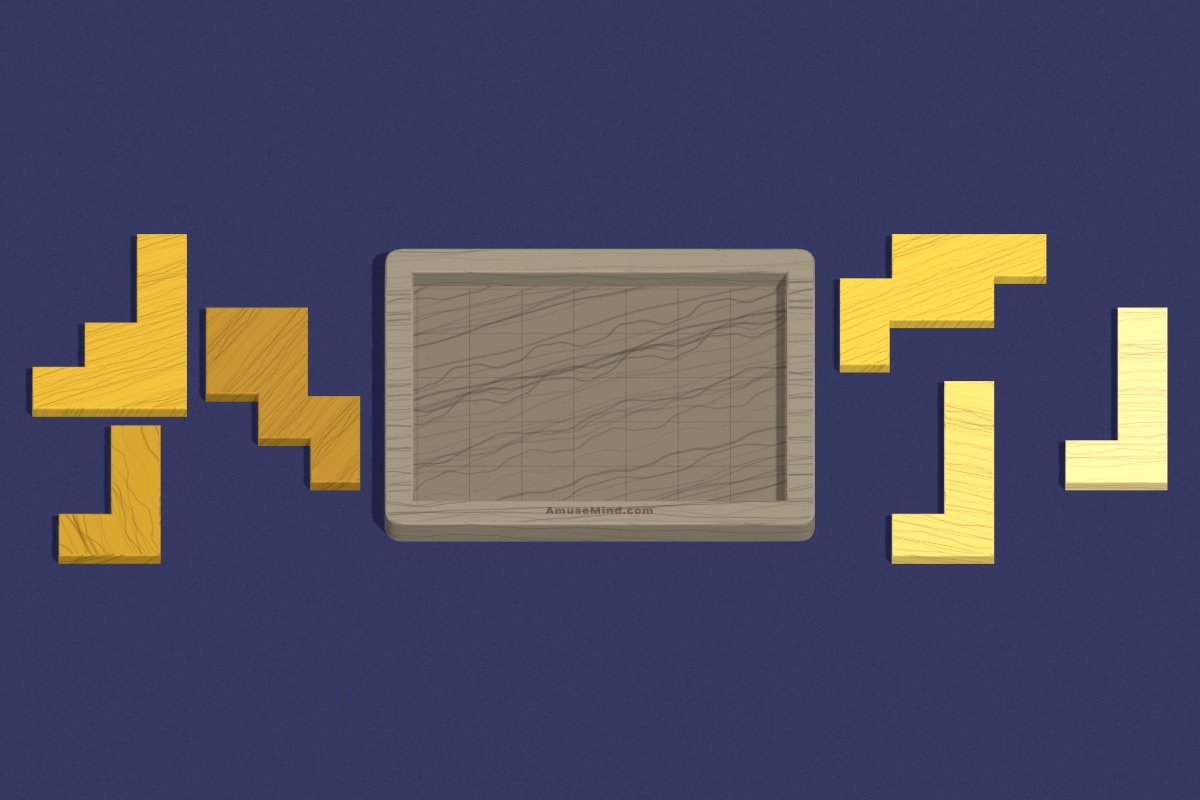
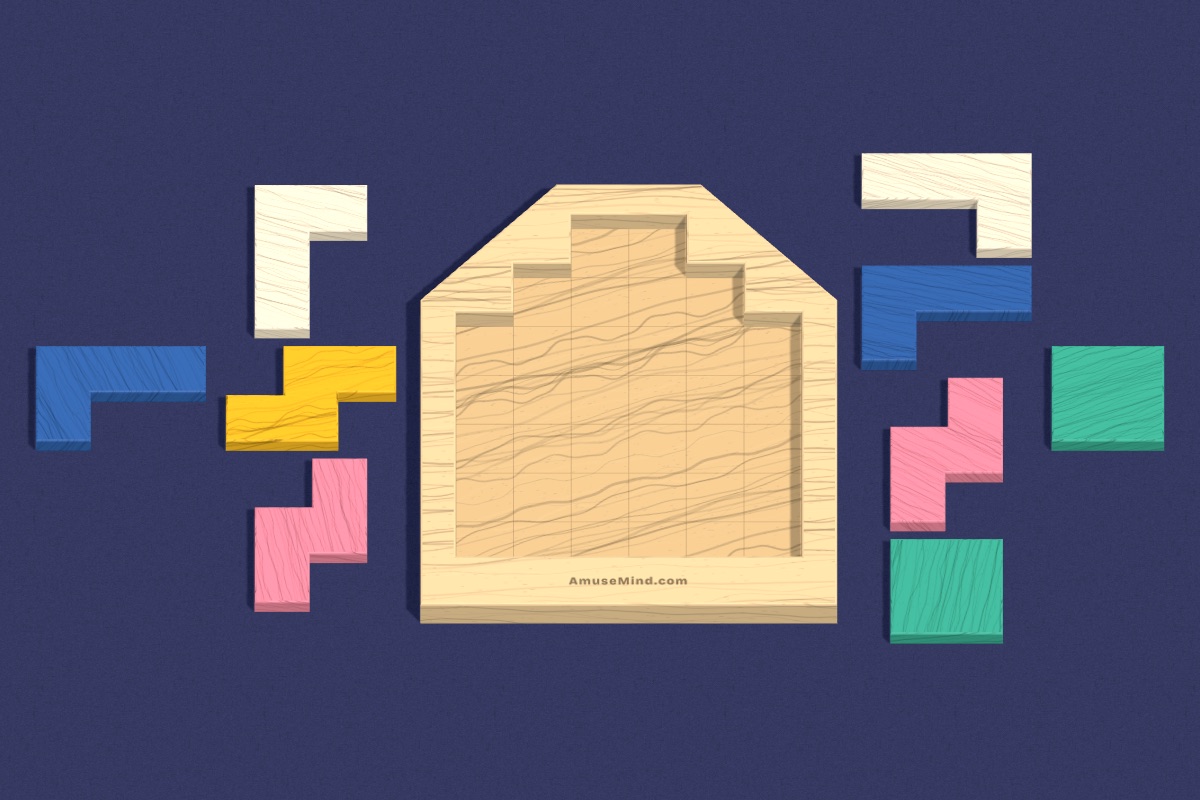
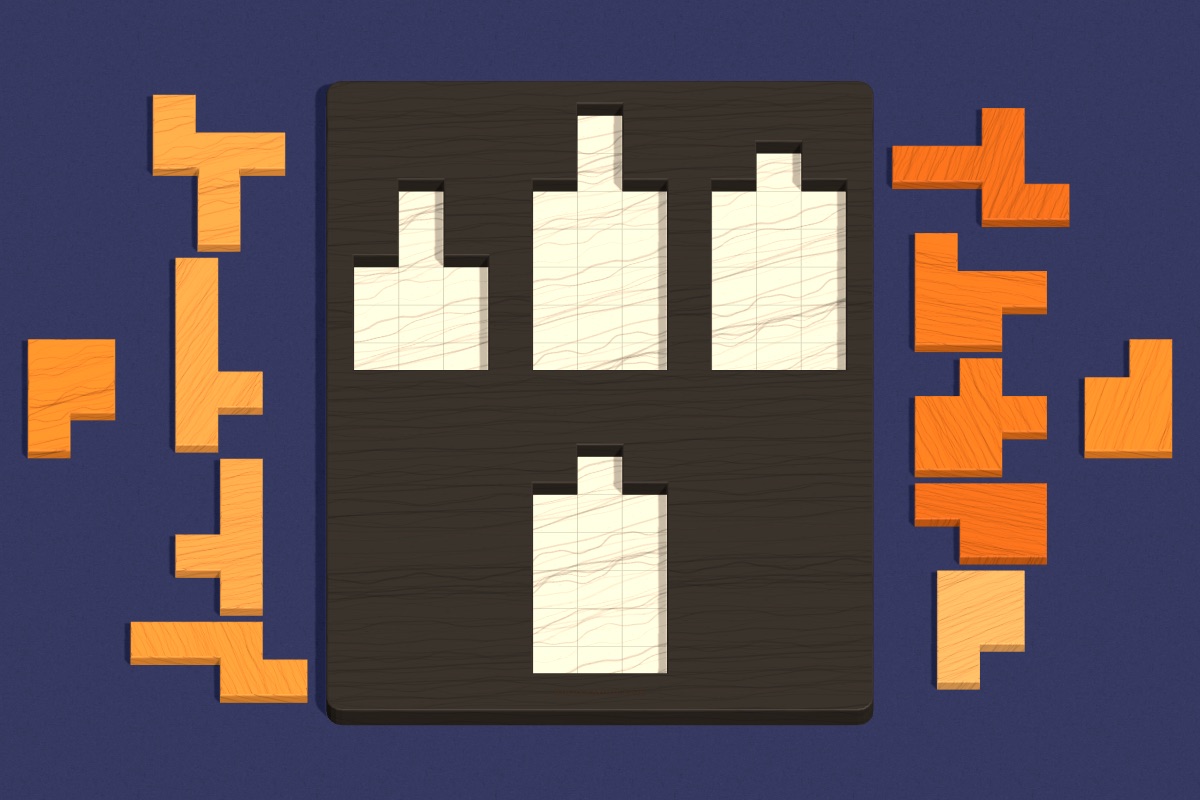
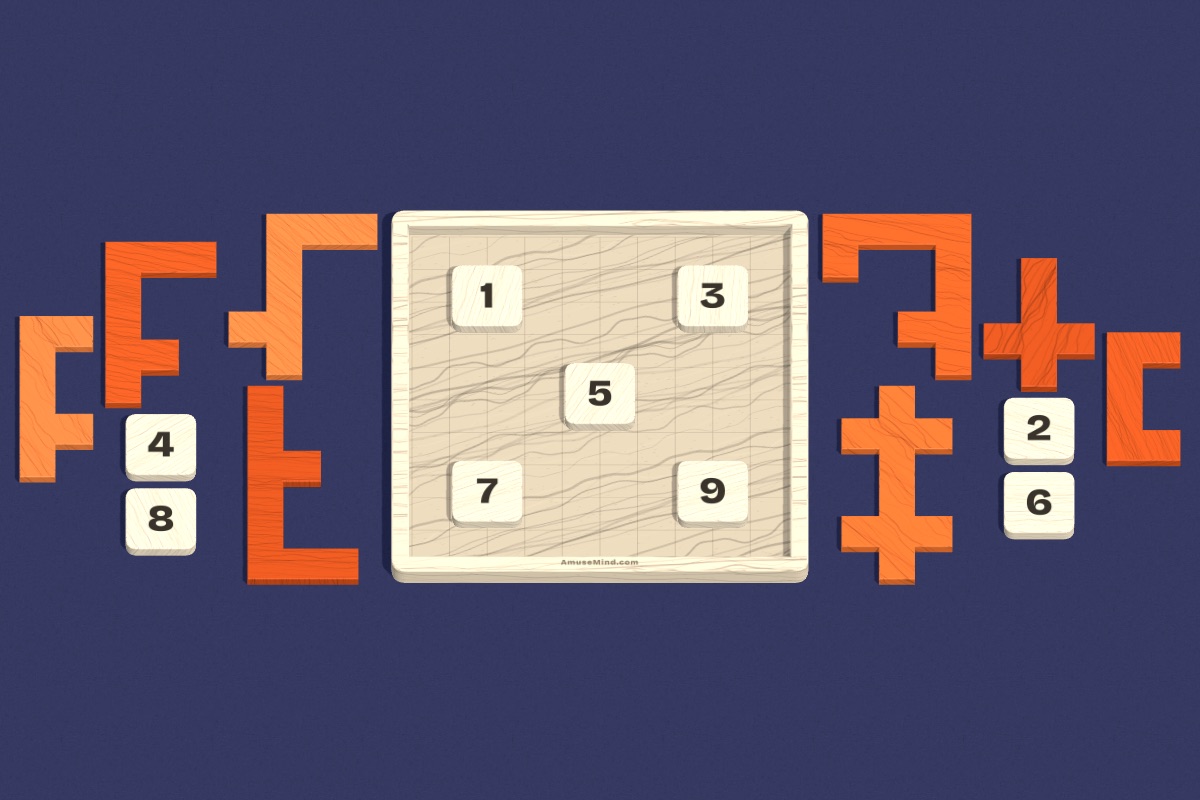
Rectangle Tray uses polyomino pieces in a rectangle, with fixed blocked squares at the hardest levels. Block House fills a house shape with tetrominoes, and at the top levels pieces arrive one at a time from a NEXT queue. Six Bottles shares one pile of pieces between several bottle-shaped holes, so a piece used in one bottle can’t go in another.
Every tray puzzle is generated fresh with a known solution, so there is always an answer. Beginner pieces start the right way round; harder levels need turning and flipping.
Polyomino play without a screen
Squared paper is all you need to start. Ask your child to draw every different shape they can make from four squares, and see if they can find all five (or seven, if flipped shapes count as different). Then try with five squares and see how many of the twelve pentominoes they find.
Cut the shapes out and try to fit them into a rectangle. A 4 × 5 rectangle from four or five pieces is a good first challenge; fitting all twelve pentominoes into 6 × 10 is a long-term project for keen puzzlers.
Talk about area as you go. Counting squares to check that pieces can fill a space is a natural, practical introduction to area, the same idea children meet later in maths lessons.
The on-screen trays add something paper can’t: fresh puzzles with known solutions every time, and pieces that turn and flip with a tap.
Questions parents ask
How many pentominoes are there?
Twelve, if mirror images count as the same shape.
What age are pentomino puzzles for?
Simple trays with a few big pieces suit children from about five or six; full pentomino rectangles suit older children.
What is the best tip for polyomino puzzles?
Place awkward pieces and fill corners first, and check that every gap you leave can still be filled.
Do I need to flip pieces in polyomino puzzles?
Sometimes. On easier AmuseMind levels pieces only need turning; at Hacker and Demon, some pieces start flipped and have to be turned over to fit.


