Tangram is seven flat pieces that can make a square, a cat, a boat or a running person. It is one of the best ways for children to learn how shapes fit together, and it’s easier to solve when you know what the pieces have in common.
Meet the seven pieces
A tangram set has two large triangles, one medium triangle, two small triangles, a square and a parallelogram. All the triangles have the same shape (a right angle and two equal sides); they just come in three sizes.
The sizes are linked. Two small triangles make the medium triangle, the square or the parallelogram. Two medium-sized areas make a large triangle. If the small triangle is 1, the square, the parallelogram and the medium triangle are each 2, and each large triangle is 4, so the whole set adds up to 16. Children who notice this can swap pieces in their head.
A method for any shape
Place the two large triangles first. They are a quarter of the area each, so where they go decides most of the puzzle. Look for big triangular regions or long straight edges in the silhouette.
Next, look for corners. A sharp 45-degree point usually needs a triangle tip; a square corner can be the square, the corner of a triangle, or the parallelogram turned the right way. Narrow necks and feet (like the legs of an animal) are often the small triangles or the parallelogram.
Save the parallelogram for last if you can. It is the only piece that has to be flipped to change its slant, and children often forget that it can be.
Shapes to try first
Start with figures that have strong straight lines: a house, a rocket, an arrow, a boat. Then move to animals like a fish, a duck or a cat, where the pieces sit at angles. The plain square, made from all seven pieces, is surprisingly hard; save it for a confident solver.
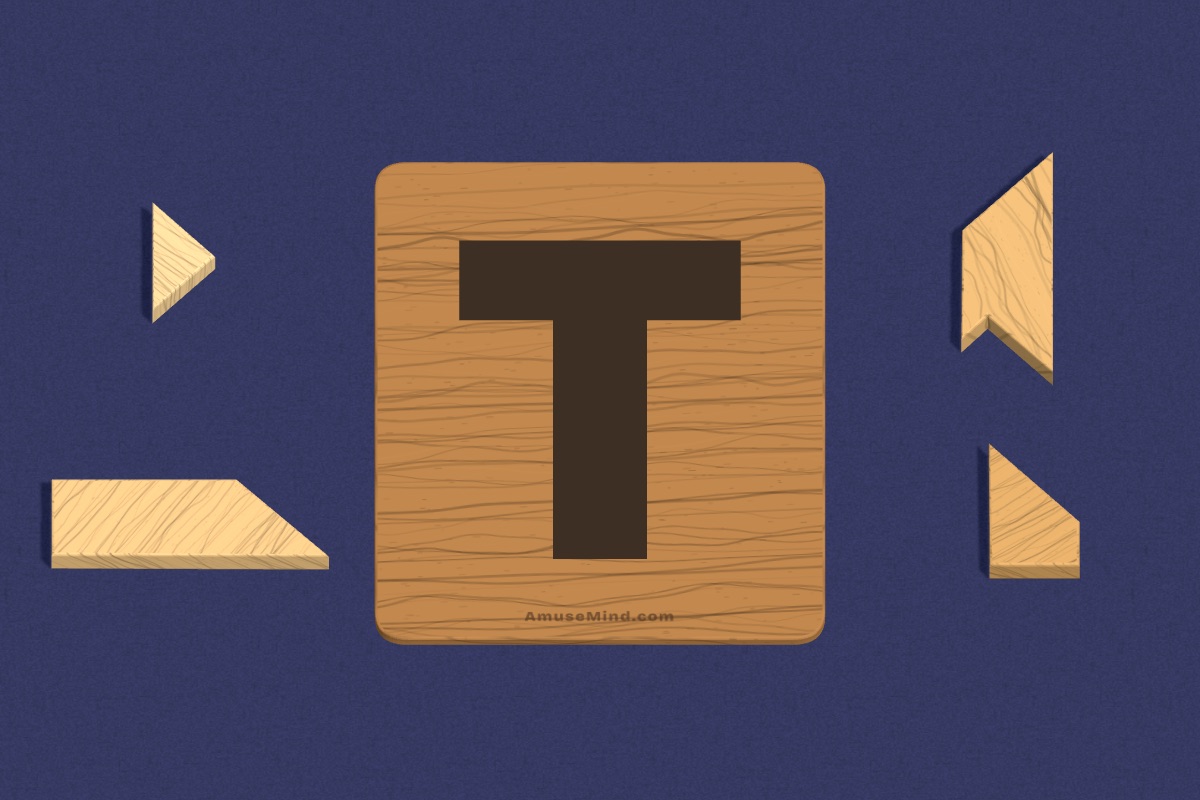
In AmuseMind, Beginner and Intermediate draw each piece’s outline faintly inside the silhouette, which is a perfect first step. Pro shows only the shape, and Hacker and Demon start the parallelogram flipped the wrong way.

Helping without solving
Point rather than place. “Which piece could make that pointy bit?” keeps the thinking with your child. If they’re stuck, suggest taking the large triangles out and trying them somewhere else, since an early large triangle in the wrong place blocks everything.
Younger children (five and six) can work happily with outlines showing. From about seven, silhouettes on their own become a satisfying challenge.
Tangram activities away from the screen
Tangram is easy to make at home: draw a square on card, mark the classic lines and cut out the seven pieces. Children can then trace around their own creations to invent new puzzles for each other, which is a wonderful way to understand how silhouettes hide the pieces inside them.
Another favourite is “make it with fewer pieces”. Can your child make a square from two small triangles? From the two large triangles? A triangle from five pieces? These little challenges build exactly the shape knowledge that makes harder silhouettes easier.
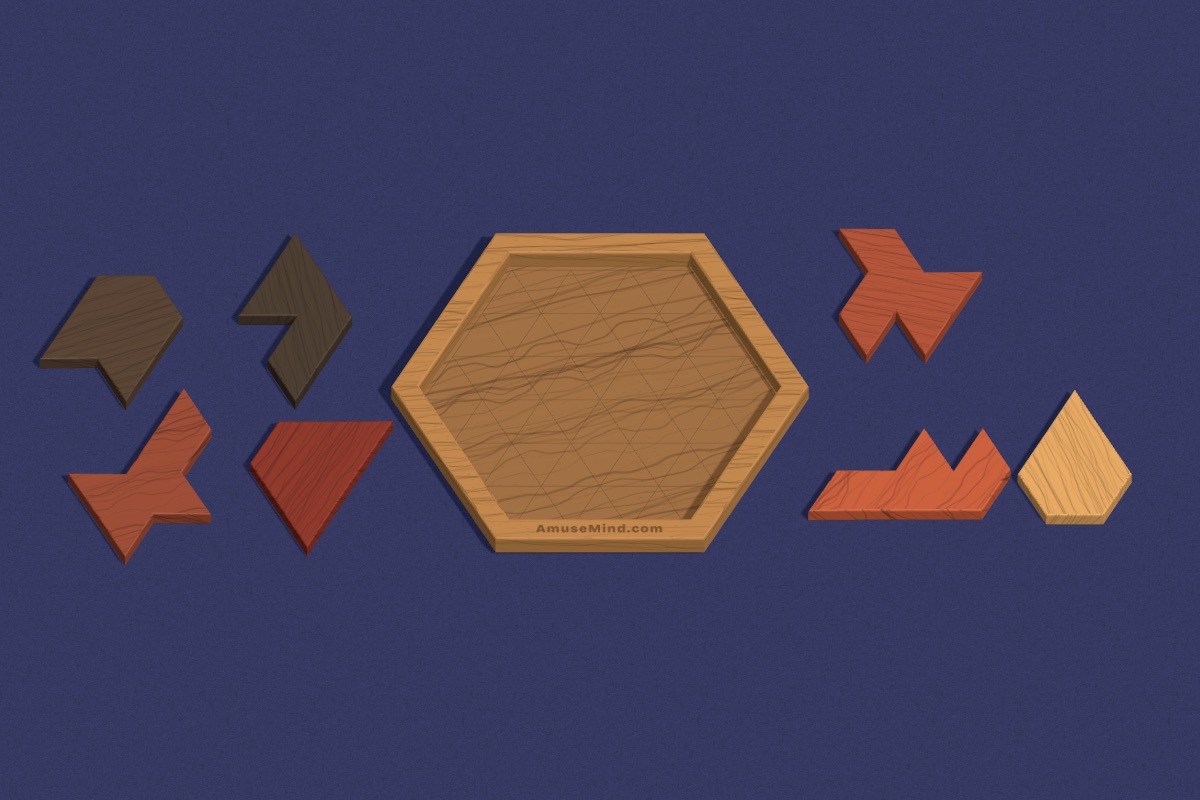
Playing on screen adds instant feedback and hundreds of tries without losing pieces under the sofa. AmuseMind’s Tangram has 26 figures across five difficulty tiers, so there is always a next shape that is just a little harder. Some children also enjoy Hexwood, which uses triangle-based pieces in a hexagon tray, as a different take on the same skills.
Questions parents ask
What are the 7 tangram pieces?
Two large triangles, one medium triangle, two small triangles, one square and one parallelogram.
What age is tangram for?
With piece outlines shown, children from about five enjoy it. Plain silhouettes suit most children from seven.
What is the hardest tangram shape?
Plain geometric shapes like the square or a long parallelogram are often harder than animals, because they give fewer clues about where pieces go.


