Luban locks are interlocking wooden puzzles from China, named after Lu Ban, a legendary carpenter. In the West, similar puzzles are called burrs. The pieces hold each other so tightly that nothing seems to move, until you find the one that does.
How interlocking puzzles work
A burr is made of notched sticks (and sometimes other shapes) that cross through each other. Each notch lets a neighbour pass. When the puzzle is assembled, almost every piece is blocked in every direction. Taking it apart means finding the order in which pieces can slide free.
Puzzle makers describe difficulty by how many moves it takes before the first piece can be removed. Simple burrs release a piece straight away; harder ones need several moves first, sometimes with pieces sliding out partway and back again.
Find the piece that moves
Start by gently trying every piece in every direction. Usually one piece, often called the key, can slide a little. In AmuseMind, tapping a piece shows brass arrows only in the directions it can actually move, which takes the frustrating guesswork out of this step.
Once something moves, look at what it has unblocked. A sliding piece opens space for its neighbours, so each move creates new options.
Expect to go back
In harder burrs, a piece must slide out a little to free a neighbour, and then slide back so another can move. Children often assume going back is undoing progress. Explaining that sometimes you have to step back to go forward is a lovely lesson these puzzles teach naturally.
Look at it from every side
Interlocking puzzles are truly three-dimensional. Turn the puzzle and look at it from above, below and each side. In AmuseMind you drag the table to turn the view. Seeing which notches line up is often what reveals the next move.
Where children should start
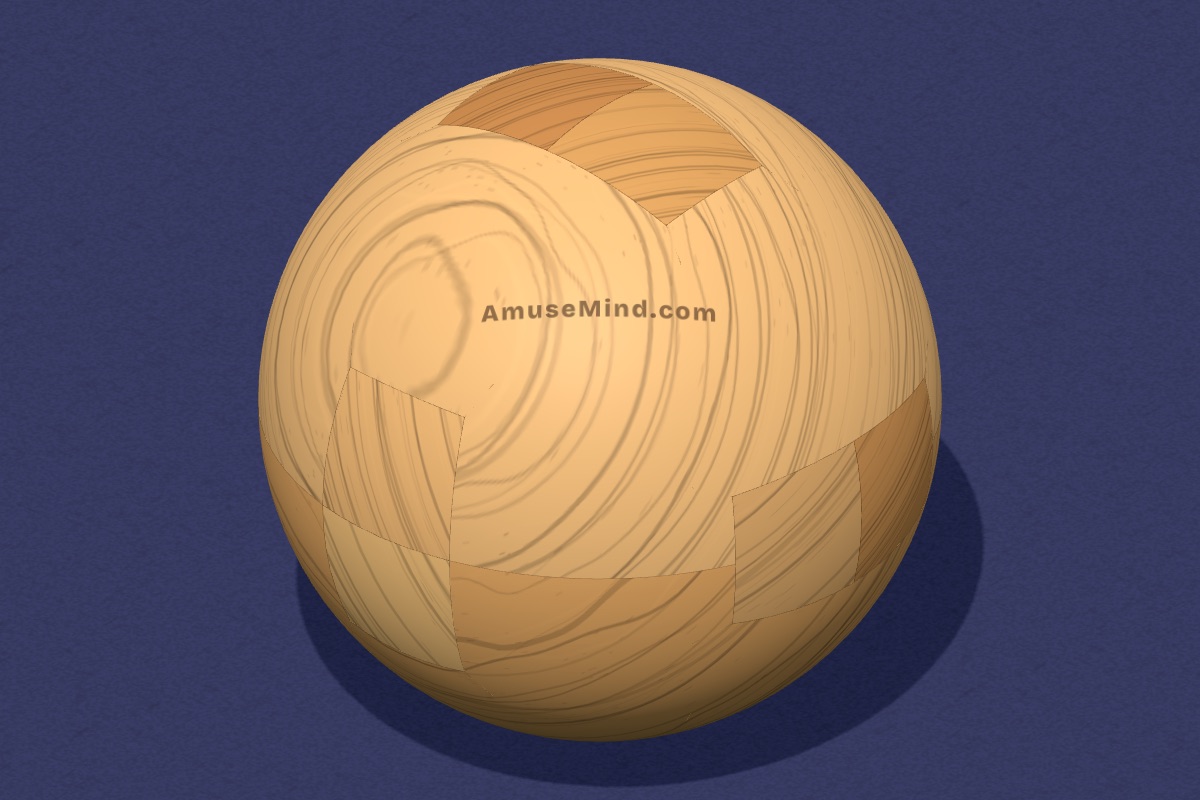
AmuseMind’s Beginner is the classic three-piece Luban lock, which comes apart in a few moves and suits children from about seven. Intermediate uses four sticks, Pro and Hacker are six-piece burrs, and Demon is the wooden magic ball, made of sticks and two domed caps.
Putting it back together
Taking a burr apart is only half the fun; putting it back together is often harder, because you have to remember or rediscover the order in reverse. Many families keep a note of the moves as they take a real wooden burr apart, so they can reassemble it later.
In AmuseMind, the demo shows the puzzle coming apart and going back together move by move, which is a nice way to understand how the pieces interlock without spoiling the challenge of the levels themselves.
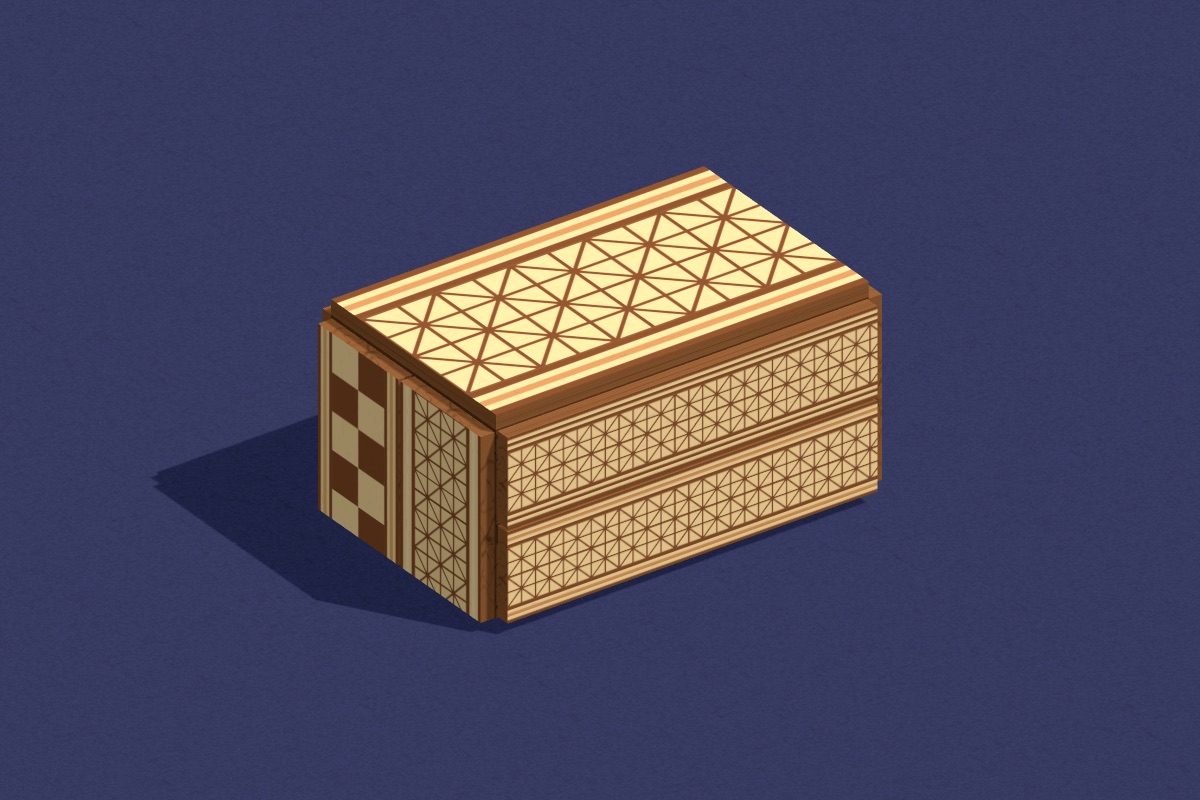
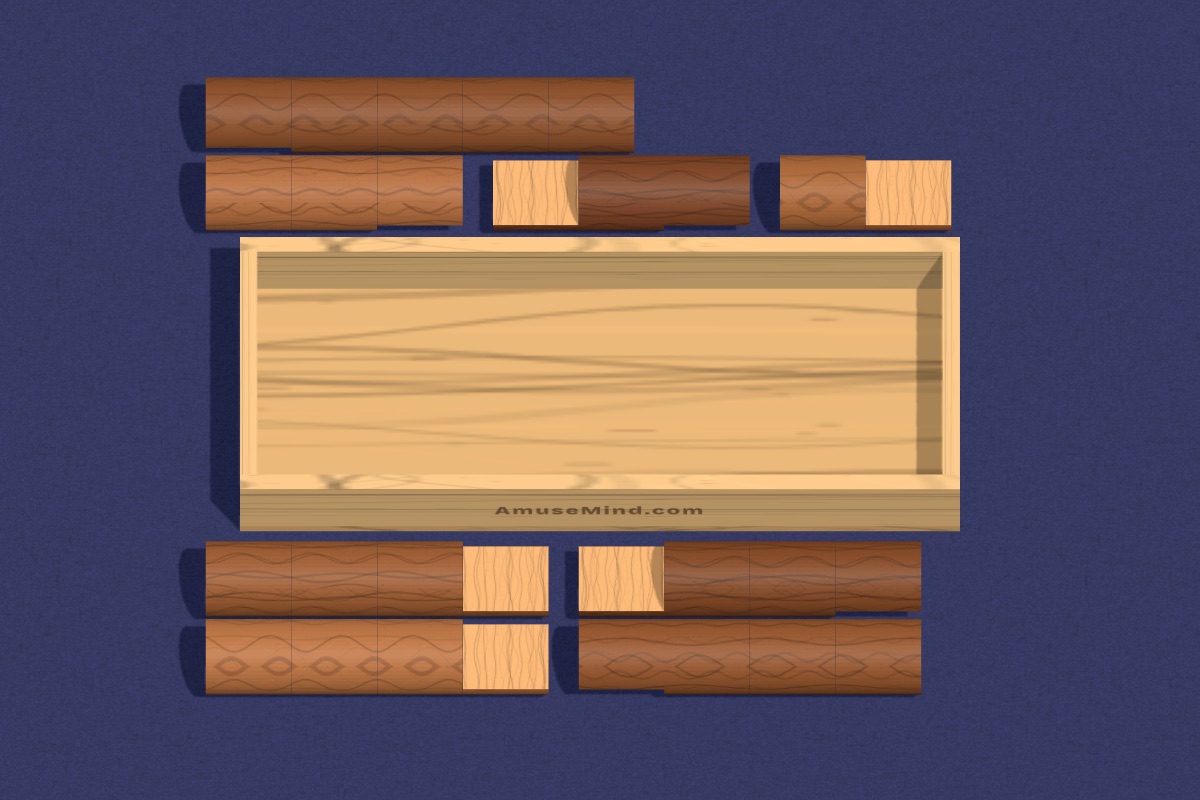
Children who enjoy burrs often love other 3D puzzles too. Puzzle Box adds hidden sliding panels and a lid that only opens at the end, and Eight Logs asks children to picture logs turning and rolling to fit them into a box. Both build the same mental rotation skills that make interlocking puzzles click.
Questions parents ask
What is a Luban lock?
An interlocking wooden puzzle from China, named after the legendary carpenter Lu Ban. Similar puzzles are called burr puzzles.
What does the level of a burr puzzle mean?
It usually means how many moves are needed before the first piece can be removed.
Are burr puzzles good for kids?
Yes. They build 3D thinking and patience. Simple three-piece locks suit most children from about seven.
What is the hardest Luban lock in AmuseMind?
The Demon level: a wooden magic ball made of six trimmed sticks and two domed caps. It needs the most pieces to be worked out, though the moves are the same kind as the simpler locks.


